
Seamless Integration: Driving SaaS Product Growth
Many SaaS product managers know the headaches that siloed systems and clunky integrations can cause. When different applications fail to communicate efficiently, user activation stalls and revenue opportunities slip through the cracks. By focusing on seamless integration strategies, you can shift your product design from isolated workflows to interconnected experiences that energize teams and users alike. Discover how connecting the right leadership and technology transforms fragmented tools into engines for growth and agility.
Table of Contents
- Defining Seamless Integration In SaaS
- Types Of Seamless Integration Approaches
- How Seamless Integration Improves Product Outcomes
- Key Requirements And Common Challenges
- Risks, Costs, And SaaS Integration Alternatives
Key Takeaways
| Point | Details |
|---|---|
| Seamless Integration Enhances Efficiency | Organizations can improve operational efficiency by creating interconnected software ecosystems through SaaS integration. |
| Diverse Integration Strategies Exist | Various integration methods, such as API-driven solutions and middleware, provide options to meet specific business needs. |
| Challenges Include Data Security and Complexity | Companies should be aware of common challenges like data security vulnerabilities and system integration complexity. |
| Strategic Planning is Essential | Careful planning is required to align integration approaches with business objectives and to ensure effective implementation. |
Defining Seamless Integration in SaaS
Seamless integration in Software-as-a-Service (SaaS) represents a sophisticated approach to connecting different cloud-based applications and systems to enable fluid data exchange and workflow optimization. At its core, seamless integration transforms fragmented software ecosystems into cohesive, interconnected environments that enhance operational efficiency.
The fundamental goal of SaaS integration is to create a unified technological landscape where diverse applications communicate effortlessly. This process involves connecting multiple cloud and on-premises systems through advanced integration techniques that enable:
- Automated data synchronization
- Real-time information sharing
- Elimination of manual data entry
- Reduced operational complexity
- Enhanced cross-platform collaboration
Successful SaaS integration goes beyond simple connections. It requires strategic alignment of business processes, technological infrastructures, and data workflows. Organizations must carefully map out their integration strategy, considering factors like API compatibility, data security, scalability, and performance metrics.
Modern SaaS integration leverages multiple connection methodologies, including:
- API-driven integrations
- Webhook connections
- Middleware platforms
- Direct database synchronization
- Custom integration scripts
The ultimate objective is creating a seamless technological ecosystem where information flows naturally between different software platforms, reducing friction and maximizing operational potential.

Pro tip: Prioritize integration solutions that offer flexible, scalable architectures and robust security protocols to future-proof your SaaS ecosystem.
Types of Seamless Integration Approaches
SaaS integration encompasses a diverse range of methodologies designed to connect applications and systems with maximum efficiency and minimal friction. SaaS integration strategies vary widely, offering organizations multiple approaches to creating interconnected technological ecosystems.
The primary types of seamless integration approaches include:
- API-Based Integrations: Direct connections using application programming interfaces
- Embedded iPaaS: Pre-built integration solutions integrated within SaaS products
- Middleware Platforms: Centralized integration hubs for data orchestration
- Native Connectors: Purpose-built connection tools specific to particular software environments
- Custom Integration Scripts: Tailored programming solutions for unique business requirements
Each integration approach offers distinct advantages depending on an organization’s specific technological landscape and operational needs. API-driven integrations provide maximum flexibility, allowing developers to create custom connections between different software platforms. These integrations enable real-time data synchronization and complex workflow automation.
Here’s how major SaaS integration approaches stack up on key business factors:
| Approach | Implementation Complexity | Customization Potential | Typical Cost Impact |
|---|---|---|---|
| API-Based Integration | Moderate to High | Extensive | Variable |
| Embedded iPaaS | Low | Limited | Predictable |
| Middleware Platforms | Moderate | Flexible | Moderate to High |
| Native Connectors | Low | Minimal | Usually Low |
| Custom Integration | High | Very High | Often High |
Middleware solutions represent another critical integration strategy, functioning as centralized platforms that facilitate communication between disparate systems. These platforms abstract the complexity of inter-application communication, providing a standardized approach to data transfer and system connectivity.
Successful SaaS integration requires a strategic approach that balances technical capability with business objectives.
The selection of an integration approach depends on multiple factors, including:
- Complexity of existing technological infrastructure
- Scalability requirements
- Budget constraints
- Performance expectations
- Security and compliance considerations
Pro tip: Conduct a comprehensive audit of your existing systems before selecting an integration approach to ensure maximum compatibility and minimal disruption.
How Seamless Integration Improves Product Outcomes
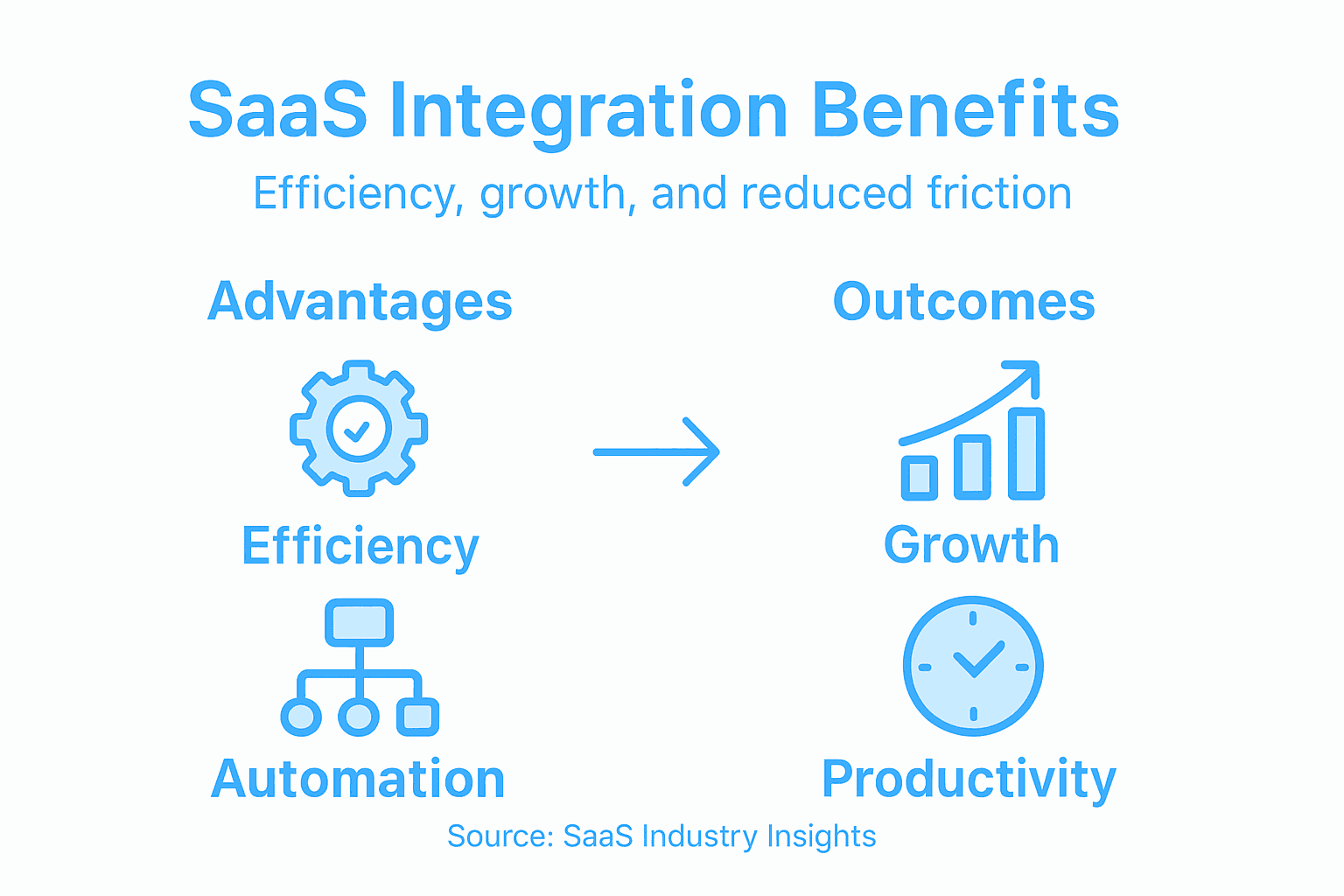
Seamless integration strategies fundamentally transform how SaaS products deliver value by creating interconnected technological ecosystems that enhance operational efficiency and user experience. By breaking down data silos and enabling fluid communication between different applications, organizations can dramatically improve their product outcomes and competitive positioning.
The primary ways seamless integration drives product improvement include:
- Enhanced Data Visibility: Unified view across multiple systems
- Automated Workflow Optimization: Reduced manual intervention
- Real-Time Performance Tracking: Immediate insights and decision-making
- Error Reduction: Minimized manual data entry mistakes
- Scalable Infrastructure: Flexible system adaptability
Operational efficiency emerges as a critical benefit of seamless integration. By automating routine tasks and creating standardized data exchange mechanisms, SaaS products can significantly reduce time-consuming manual processes. This automation allows teams to redirect their focus from repetitive administrative work to strategic innovation and value creation.
Seamless integration transforms technological complexity into competitive advantage by enabling more responsive, intelligent product experiences.
The strategic implications of integration extend beyond immediate operational improvements. Organizations can leverage integrated systems to:
- Accelerate product development cycles
- Improve customer satisfaction
- Enable more sophisticated data analytics
- Create more personalized user experiences
- Reduce overall technological friction
Pro tip: Conduct regular integration audits to ensure your SaaS product’s connectivity remains optimized and aligned with evolving business requirements.
Key Requirements and Common Challenges
SaaS integration requirements represent a complex landscape of technological and strategic considerations that demand meticulous planning and execution. Organizations must navigate a sophisticated terrain of technical compatibility, security protocols, and operational efficiency to achieve seamless system interconnectivity.
The critical requirements for successful SaaS integration include:
- Well-Documented APIs: Clear, comprehensive interface specifications
- Robust Security Protocols: Comprehensive data protection mechanisms
- Cross-Platform Compatibility: Flexible integration capabilities
- Scalable Architecture: Infrastructure that supports growth
- Real-Time Data Synchronization: Immediate information exchange
Common integration challenges emerge from the inherent complexity of connecting diverse technological systems. These obstacles often stem from fragmented IT environments, divergent programming languages, and the intricate nuances of maintaining consistent data integrity across multiple platforms.
Successful integration transcends technical implementation and requires a holistic approach that balances technological capability with strategic business objectives.
The most significant challenges organizations encounter during SaaS integration include:
- Managing point-to-point integration complexity
- Ensuring data consistency and accuracy
- Maintaining system security
- Addressing version control disparities
- Handling performance bottlenecks
Pro tip: Develop a comprehensive integration strategy that prioritizes flexibility, security, and scalability before implementing any technical solutions.
Risks, Costs, and SaaS Integration Alternatives
SaaS integration risks present complex challenges that demand strategic analysis and proactive management. Organizations must carefully evaluate potential technological vulnerabilities, financial implications, and operational disruptions associated with interconnecting diverse software platforms.
The primary risks and associated costs include:
- Data Security Vulnerabilities: Potential breach points across integrated systems
- Unexpected Implementation Expenses: Hidden development and maintenance costs
- Performance Degradation: Potential system slowdowns during integration
- Compliance Complications: Regulatory challenges with cross-platform data sharing
- Operational Disruption: Potential workflow interruptions during implementation
Integration alternatives offer organizations flexible strategies for mitigating risks and managing technological complexity. These approaches provide varying levels of control, scalability, and financial investment, allowing businesses to select solutions that align with their specific operational requirements.
The following summarizes typical SaaS integration risks and how alternative solutions may address them:
| Risk Area | Custom Integration | Alternative Solution Example |
|---|---|---|
| Data Security | Vulnerable | Managed integration services |
| Compliance Management | Challenging | Unified SaaS ecosystem |
| Performance Bottlenecks | Likely | Middleware platforms |
| Unexpected Costs | Frequent | iPaaS solutions |
| Operational Disruption | High risk | API gateway implementations |
Strategic integration planning transcends technical implementation and requires a holistic approach that balances risk, cost, and organizational capability.
Key alternatives to direct custom integration include:
- Integration Platform as a Service (iPaaS)
- Middleware solutions
- Unified SaaS ecosystem adoption
- Managed integration services
- API gateway implementations
Pro tip: Conduct a comprehensive cost-benefit analysis that evaluates both immediate financial implications and long-term strategic potential before selecting an integration approach.
Unlock Rapid SaaS Growth Through Seamless Design and Integration
Seamless integration is essential for SaaS companies aiming to eliminate operational friction and boost product efficiency. If you are facing challenges with complex system connectivity, inconsistent data flow, or lack of strategic alignment in your integrations, expert design leadership can make all the difference. At The Good Side Oy, we understand that smooth data synchronization and optimized user workflows require more than just technical fixes — they need intentional product design that drives business outcomes like activation, adoption, and scalable growth.
Take the next step to transform your SaaS product by embedding experienced designers who collaborate deeply with your engineering and product teams. Our senior design partners bring SaaS-specific expertise to shape integrated onboarding and user experiences that dramatically improve activation and long-term revenue. Visit The Good Side Oy to learn how our fractional design leadership accelerates your product growth without the delays or risks of full hiring. Start building a seamless, user-centered SaaS ecosystem today at https://goodside.fi.
Frequently Asked Questions
What is seamless integration in SaaS?
Seamless integration in SaaS refers to the process of connecting various cloud-based applications and systems to facilitate smooth data exchange and optimize workflows, transforming fragmented software environments into cohesive, efficient systems.
How does seamless integration improve operational efficiency?
Seamless integration enhances operational efficiency by automating data synchronization, reducing manual entry, minimizing errors, and allowing real-time information sharing across different applications, which ultimately leads to streamlined processes.
What are the common types of integration approaches in SaaS?
Common types of SaaS integration approaches include API-based integrations, embedded iPaaS, middleware platforms, native connectors, and custom integration scripts, each offering unique advantages depending on business needs and existing infrastructure.
What are the key challenges associated with SaaS integration?
Key challenges of SaaS integration include managing point-to-point integration complexity, ensuring data consistency and accuracy, maintaining security, and addressing performance bottlenecks during system interconnections.
Recommended
- What Is Scalable SaaS Design? Complete Overview
- What Is Scalable SaaS Design? Complete Overview | The Good Side Blog
- Complete Guide to Business Design in SaaS | The Good Side Blog
- Growth Design: Transforming SaaS UX Into Revenue | The Good Side Blog
- Karl Lundgren Business Coaching and M50 Media Blog
- B2B SEO Agency – Scalable SEO Strategies for B2B Growth
- Shipping API: Alles Wat Je Moet Weten – Send with Parcel International