
Agile Design: Driving SaaS Team Growth and Alignment
Every SaaS product manager knows the frustration of seeing promising features stall when teams cling to rigid roadmaps. Adopting agile design brings a new level of adaptability, turning static planning into a systematic, iterative process that evolves alongside changing customer needs. For those leading established software teams across markets from Canada to Germany, embracing agile methods unlocks new pathways to stronger collaboration and accelerated delivery. This guide explains how agile design redefines product creation, breaks down key frameworks, and clarifies the roles that drive real business impact.
Table of Contents
- Defining Agile Design For SaaS Solutions
- Key Principles And Distinctions In Practice
- Types Of Agile Design Workflows And Methods
- Roles And Collaboration Within Agile Design
- Common Pitfalls And How To Avoid Them
Key Takeaways
| Point | Details |
|---|---|
| Agile Design Enhances Flexibility | Adopting agile design allows SaaS teams to create adaptable software that responds quickly to user feedback and changing market needs. |
| Focus on Cross-Functional Collaboration | Successful agile design requires integrated efforts among designers, engineers, and product managers to deliver incremental value. |
| Iterative Development Reduces Risk | Breaking projects into manageable phases minimizes development risk and accelerates time-to-market, fostering continuous improvement. |
| Proactive Mitigation of Common Pitfalls | Teams must address potential challenges, such as unclear requirements and communication breakdowns, through transparency and regular feedback mechanisms. |
Defining Agile Design for SaaS Solutions
Agile design represents a transformative approach for SaaS solutions, moving beyond traditional linear development models. Systematic, iterative design methodologies enable product teams to create more responsive, adaptable software experiences that align closely with evolving customer needs.
At its core, agile design prioritizes flexibility and continuous improvement through strategic, incremental development. This methodology breaks down complex product challenges into manageable phases, allowing teams to:
- Rapidly prototype and test new features
- Gather immediate user feedback
- Adjust product direction based on real-world insights
- Reduce overall development risk
- Accelerate time-to-market for critical functionality
The fundamental philosophy behind agile design centers on customer-centricity. Product teams become responsive living systems, constantly adapting to market signals rather than following rigid, predetermined roadmaps. Continuous feedback mechanisms transform product development from a linear process into a dynamic, collaborative journey.
Successful agile design in SaaS requires cross-functional alignment, where designers, engineers, and product managers work as integrated units. This approach demands transparency, frequent communication, and a shared commitment to iterative improvement. Each sprint becomes an opportunity to refine user experiences, optimize technical performance, and deliver incremental value.
Pro tip: Implement weekly cross-functional design reviews to ensure all team members understand current product objectives and can contribute meaningful insights.
Key Principles and Distinctions in Practice
Agile design distinguishes itself through 12 fundamental principles that fundamentally reshape how software development teams approach product creation. Unlike traditional waterfall methodologies, agile prioritizes adaptability, continuous learning, and incremental value delivery over rigid, predetermined planning.
The core principles of agile design can be distilled into several critical distinctions:
- Prioritizing customer satisfaction through early and continuous software delivery
- Welcoming changing requirements, even late in development
- Delivering working software frequently (weeks rather than months)
- Maintaining daily collaboration between business stakeholders and developers
- Building projects around motivated, trusted individuals
- Emphasizing face-to-face communication as the most efficient method
These principles create a dynamic framework that transforms product development from a linear process into an adaptive, responsive ecosystem. Customer value and collaboration become central metrics of success, replacing traditional benchmarks focused solely on adherence to initial specifications.

Successful implementation requires more than procedural changes. It demands a cultural shift where teams embrace uncertainty, view feedback as an opportunity, and remain committed to continuous improvement. Each development cycle becomes a learning experience, with teams constantly reflecting on their performance and adjusting their approach to enhance effectiveness.
Pro tip: Implement a monthly retrospective session where team members candidly discuss what worked, what didn’t, and specific strategies for improvement.
Types of Agile Design Workflows and Methods
SaaS product teams have multiple agile methodologies to choose from, each offering unique approaches to iterative design and development. These workflows provide flexible frameworks that enable teams to adapt quickly, deliver value incrementally, and maintain continuous alignment with customer needs.
The primary agile design methodologies include:
Here’s a quick reference comparing agile design methodologies for SaaS teams:
| Methodology | Core Focus | Best for Teams That | Unique Strength |
|---|---|---|---|
| Scrum | Sprint-based delivery | Value clear roles | Fast incremental output |
| Kanban | Visual workflow | Handle many tasks | Real-time efficiency |
| Extreme Programming | Code quality and feedback | Need technical agility | Rapid code improvement |
| Lean | Waste reduction | Optimize resources | Max customer value |
| Crystal | Tailored agility | Varying team sizes | Method adapts to scale |
| FDD | Feature building | Large-scale projects | Modular development |
| DSDM | Rapid prototyping | Tight deadlines | Speed and collaboration |
- Scrum: Emphasizes short, time-boxed sprints with clear roles and structured meetings
- Kanban: Focuses on visualizing work, limiting work in progress, and optimizing workflow
- Extreme Programming (XP): Prioritizes technical excellence and rapid feedback
- Feature-Driven Development (FDD): Centers on building features incrementally
- Lean: Minimizes waste and maximizes customer value
- Dynamic Systems Development Method (DSDM): Provides a framework for rapid application development
- Crystal: Offers a family of methodologies adaptable to project complexity
Iterative cycles form the backbone of these methodologies, breaking down complex tasks into manageable increments. Each workflow shares core principles of continuous collaboration, adaptive planning, and responsive design. The key difference lies in their specific implementation strategies and focus areas.
Successful agile design requires more than selecting a methodology. Teams must cultivate a mindset of continuous learning, embrace uncertainty, and remain committed to delivering value. The chosen workflow should align with the team’s unique dynamics, project requirements, and organizational culture.
Pro tip: Experiment with different agile methodologies and be prepared to customize or hybrid approaches to fit your specific team’s needs and project complexities.
Roles and Collaboration Within Agile Design
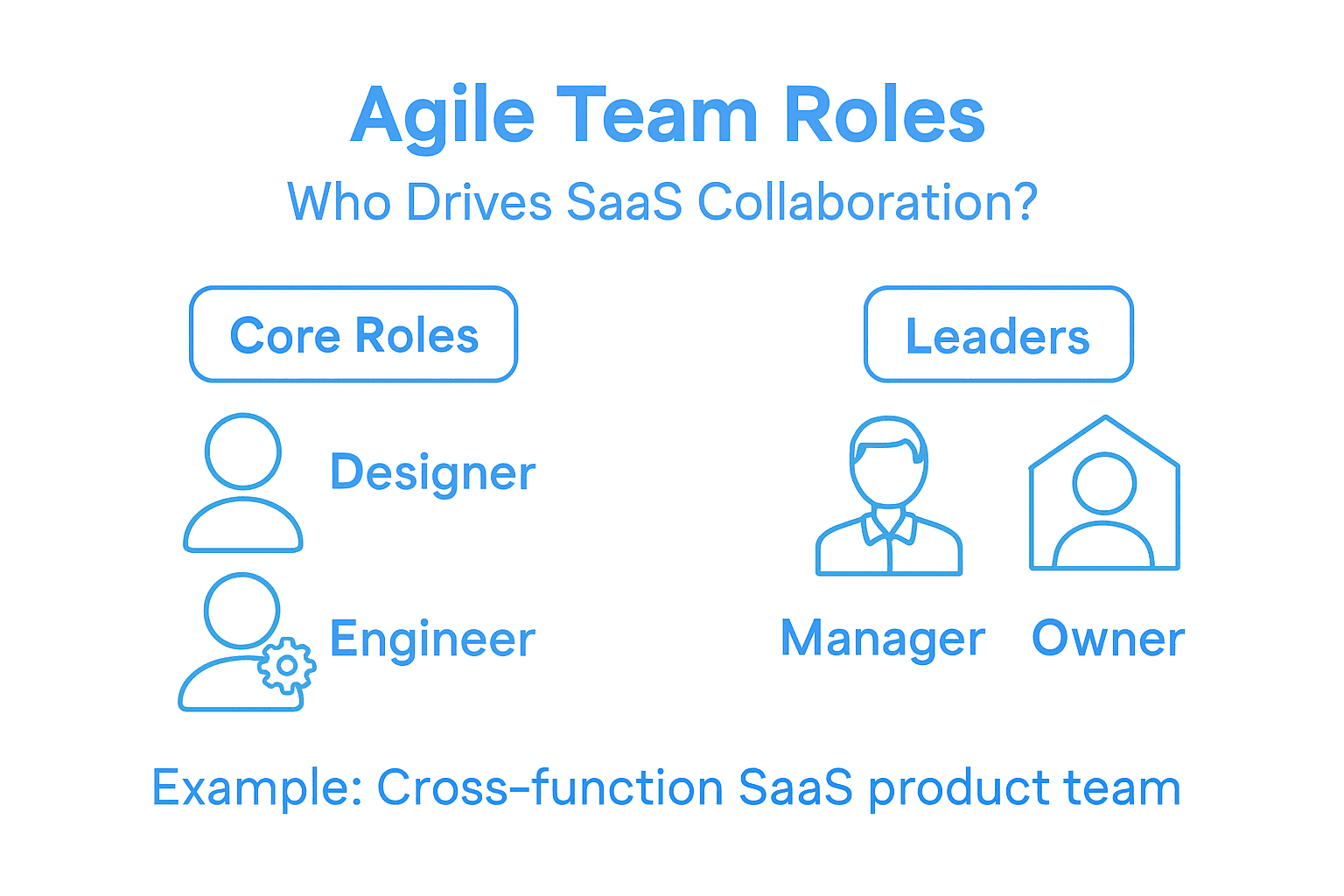
Agile design demands a sophisticated approach to team dynamics, where well-defined roles create collaborative ecosystems that drive innovation and productivity. Unlike traditional hierarchical structures, agile teams operate through interdependent relationships that prioritize collective achievement over individual performance.
The core roles in an agile design team typically include:
- Product Owner: Defines product vision, manages backlog, and represents stakeholder interests
- Scrum Master: Facilitates team processes, removes obstacles, and ensures agile principles are followed
- Design Team Members: Execute design work, prototype solutions, and validate user experiences
- Technical Architects: Provide technical guidance and ensure design feasibility
- Quality Assurance Specialists: Validate product quality and user satisfaction
- User Research Experts: Gather and synthesize user insights to inform design decisions
Cross-functional collaboration becomes the cornerstone of successful agile design. Each team member brings unique expertise, creating a holistic approach where design, development, and user needs intersect seamlessly. The most effective teams cultivate an environment of psychological safety, where open communication and constructive feedback are not just encouraged but expected.
Successful implementation requires more than assigning titles. Teams must develop shared mental models, maintain transparent communication channels, and remain committed to continuous learning. Regular rituals like sprint planning, daily stand-ups, and retrospective meetings help synchronize efforts and maintain collective momentum.
Pro tip: Implement a rotating leadership model where team members take turns facilitating meetings and driving specific project initiatives to build collective ownership and distributed expertise.
Common Pitfalls and How to Avoid Them
Agile design initiatives frequently encounter predictable challenges that can derail project success. Understanding these potential roadblocks is crucial for SaaS teams seeking to maintain momentum and deliver exceptional products consistently.
The most significant pitfalls in agile design include:
This summary helps you identify strategies to overcome agile design pitfalls:
| Pitfall | Impact on Team | Proactive Solution |
|---|---|---|
| Unclear Requirements | Misaligned efforts | Detailed sprint kickoffs |
| Scope Creep | Delays, overwork | Set strict backlog boundaries |
| Team Overload | Burnout risk | Prioritize task distribution |
| Communication Breakdowns | Costly mistakes | Daily stand-up meetings |
| Resistance to Change | Low engagement | Ongoing training sessions |
- Unclear Requirements: Shifting or ambiguous project objectives
- Poor Backlog Management: Ineffective prioritization of tasks and features
- Communication Breakdowns: Siloed team interactions and limited information sharing
- Scope Creep: Uncontrolled expansion of project boundaries
- Team Overload: Unrealistic workload expectations
- Resistance to Change: Organizational inertia and rigid thinking
Proactive mitigation strategies are essential for navigating these challenges. Teams must cultivate a culture of transparency, maintain rigorous communication protocols, and develop adaptive planning mechanisms. Organizational alignment and continuous improvement become critical components of sustainable agile design practices.
Successful teams recognize that avoiding pitfalls requires more than technical solutions. They invest in creating psychological safety, promoting open dialogue, and developing shared mental models that enable rapid problem-solving and collaborative innovation. Regular retrospectives, candid feedback mechanisms, and a commitment to learning become the foundation of resilient agile design approaches.
Pro tip: Conduct monthly cross-functional workshops to identify potential workflow obstacles and collaboratively develop mitigation strategies before they become critical issues.
Accelerate SaaS Growth with Agile Design Expertise
The article highlights the core challenge SaaS teams face in adopting agile design workflows that foster true collaboration, continuous feedback, and business-aligned product outcomes. Common pain points like unclear requirements, communication breakdowns, and resistance to change can stall agile progress and limit team growth. At The Good Side Oy, we understand these hurdles and provide embedded senior design leadership that integrates seamlessly with your product and engineering teams. Our designers bring strategic ownership and hands-on execution to help you move beyond surface-level UI fixes and embrace true agile principles for faster iteration and stronger alignment.
Discover how partnering with a fractional design leader can directly address pitfalls like scope creep and team overload while promoting transparency and shared accountability. Visit The Good Side website to learn how our SaaS-specific design expertise supports iterative workflows, improves activation and adoption, and fuels long-term revenue impact. Don’t wait for misaligned teams or stalled progress to hold you back. Start building greater agility and growth momentum now by exploring our approach at The Good Side.
Frequently Asked Questions
What is agile design in the context of SaaS solutions?
Agile design is a flexible, iterative approach to software development that emphasizes continuous improvement and customer-centric development. It enables SaaS teams to respond rapidly to changing customer needs and market demands.
How does agile design enhance collaboration within SaaS teams?
Agile design promotes cross-functional collaboration among team members such as designers, engineers, and product managers. It fosters transparency, frequent communication, and shared commitment to iterative improvement, creating a collaborative ecosystem that drives innovation.
What are some common pitfalls to avoid in agile design projects?
Common pitfalls include unclear requirements, scope creep, communication breakdowns, and team overload. Proactive solutions include maintaining detailed sprint kickoffs, setting strict backlog boundaries, holding daily stand-up meetings, and creating a culture of continuous improvement.
What methodologies are commonly used in agile design for SaaS?
Common agile methodologies for SaaS design include Scrum, Kanban, Extreme Programming (XP), Lean, Feature-Driven Development (FDD), Dynamic Systems Development Method (DSDM), and Crystal. Each methodology offers unique strengths and focuses on different aspects of iterative design and development.