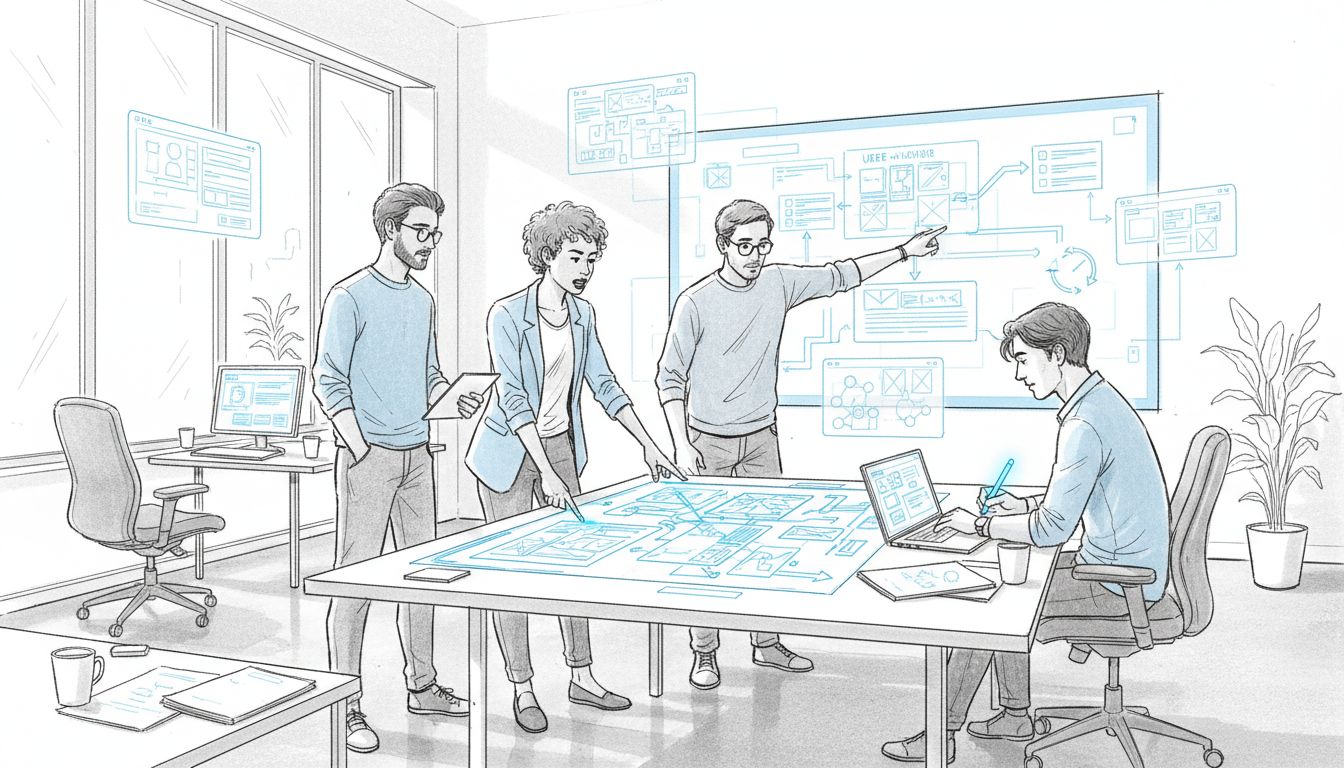
Why Prioritize User Experience: Essential SaaS Guide
Most american SaaS companies lose nearly 80 percent of users due to frustrating software experiences. As competition intensifies, user experience is quickly becoming the line between rapid growth and costly churn. When customers encounter a product that feels intuitive and genuinely helpful, they are much more likely to stick around. This article offers a clear look at what defines standout user experience for SaaS, why it matters, and how your strategy can set you apart.
Table of Contents
- Defining User Experience for SaaS Products
- Core Benefits of Prioritizing User Experience
- Key Drivers of Effective UX Strategy
- Risks and Costs of Neglecting User Experience
- Real-World Impact: SaaS Success Stories
Key Takeaways
| Point | Details |
|---|---|
| Focus on User Experience | Prioritizing user experience transforms SaaS products into strategic business assets that enhance user satisfaction and loyalty. |
| Key Strategic Benefits | Exceptional UX leads to accelerated user adoption, reduced churn rates, and improved overall productivity through seamless integration. |
| Core UX Drivers | Successful UX strategies rely on empathy, iterative processes, and continuous user feedback to ensure alignment with user needs. |
| Consequences of Neglect | Ignoring user experience can significantly increase costs, lead to higher customer churn rates, and harm brand reputation. |
Defining User Experience for SaaS Products
User experience (UX) represents the holistic journey a customer travels when interacting with a software product. According to Wikipedia, UX encompasses a user’s interactions and perceptions when engaging with a product, system, or service, including critical dimensions like utility, ease of use, and overall efficiency.
In the SaaS world, user experience transcends simple functionality. It’s about creating an intuitive, seamless interface that solves real problems while minimizing user friction. A user-centered design framework emphasizes understanding end-user behaviors, needs, and challenges through iterative processes that continuously incorporate user feedback to enhance usability and satisfaction.
Effective UX design for SaaS products involves several key strategic elements:
- Understanding user personas and their specific workflow challenges
- Mapping comprehensive user journeys across different interaction points
- Creating intuitive navigation and clear information architecture
- Designing responsive interfaces that work across multiple devices
- Implementing consistent visual and interaction design patterns
By prioritizing user experience, SaaS companies can differentiate themselves in a crowded marketplace.
The goal isn’t just creating software that works—it’s about crafting digital experiences that feel natural, efficient, and genuinely helpful to your target users. When done right, exceptional UX becomes a powerful competitive advantage that drives user retention, satisfaction, and long-term product success.
For deeper insights into developing a robust UX strategy, check out our guide on the role of UX in SaaS.
Core Benefits of Prioritizing User Experience
Prioritizing user experience transforms SaaS products from mere functional tools into strategic business assets. Research from JETIR reveals that a deliberate focus on user experience leads to increased user engagement, higher retention rates, and dramatically improved market competitiveness.
For SaaS companies, the benefits of exceptional UX extend far beyond surface-level aesthetics. User satisfaction becomes a powerful competitive differentiator. According to STL Digital, emphasizing user experience enables seamless integration with enterprise tools, reducing operational friction and boosting overall productivity.
Key strategic benefits of prioritizing user experience include:
- Accelerated user adoption and onboarding
- Reduced customer support requirements
- Lower churn rates and increased customer loyalty
- Enhanced brand perception and market reputation
- Improved conversion rates and user engagement
Deep UX investments create a virtuous cycle of continuous improvement. By leveraging machine learning and user data analytics, SaaS teams can develop increasingly personalized experiences that anticipate and address user needs proactively.
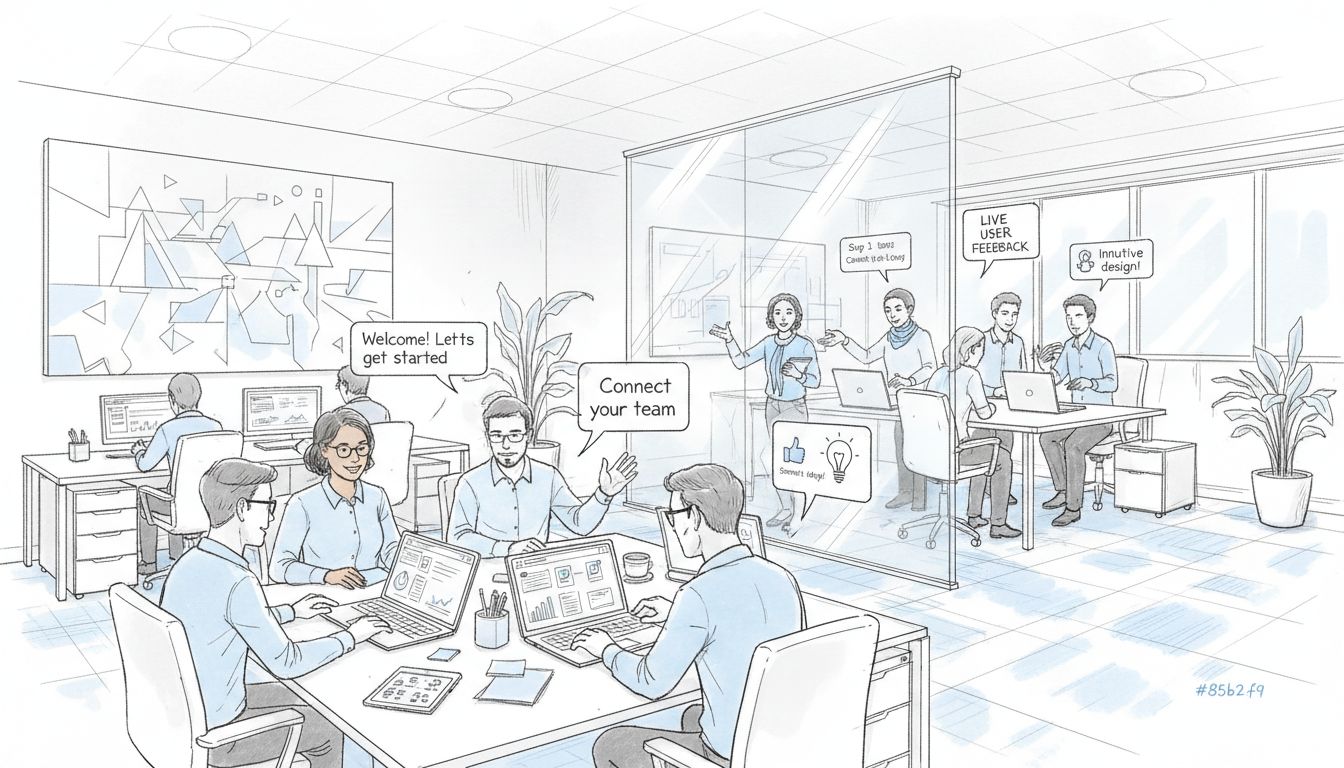
When users feel understood and supported, they’re more likely to become long-term advocates for your product.
Want a comprehensive roadmap for UX improvement? Our guide on why to invest in UX offers actionable strategies for SaaS teams seeking transformative user experiences.
Key Drivers of Effective UX Strategy
User experience strategy goes far beyond aesthetic design. Research from IJSMR reveals that effective UX strategies are fundamentally driven by core principles including empathy, iterative processes, accessibility, usability, and continuous user feedback. These principles ensure SaaS products are crafted with a deep, nuanced understanding of actual user behaviors and evolving technological needs.
According to IJPREMS research, investing in user-friendly interfaces and actively involving end-users throughout the design process represents a critical driver for successful UX strategies. This collaborative approach facilitates smoother product adoption and ensures that technological solutions genuinely address user requirements.
Key strategic drivers for effective UX development include:
- Comprehensive user research and persona development
- Continuous user journey mapping
- Rapid prototyping and iterative testing
- Cross-functional collaboration between design, engineering, and product teams
- Data-driven design decisions
- Consistent user feedback integration
Successful UX strategies demand a holistic, empathetic approach that transcends traditional design thinking. By prioritizing user needs, embracing technological flexibility, and maintaining a relentless commitment to improvement, SaaS companies can create products that not only solve problems but anticipate user expectations.
To dive deeper into strategic UX insights, explore our UX strategy guide for SaaS growth.
Risks and Costs of Neglecting User Experience
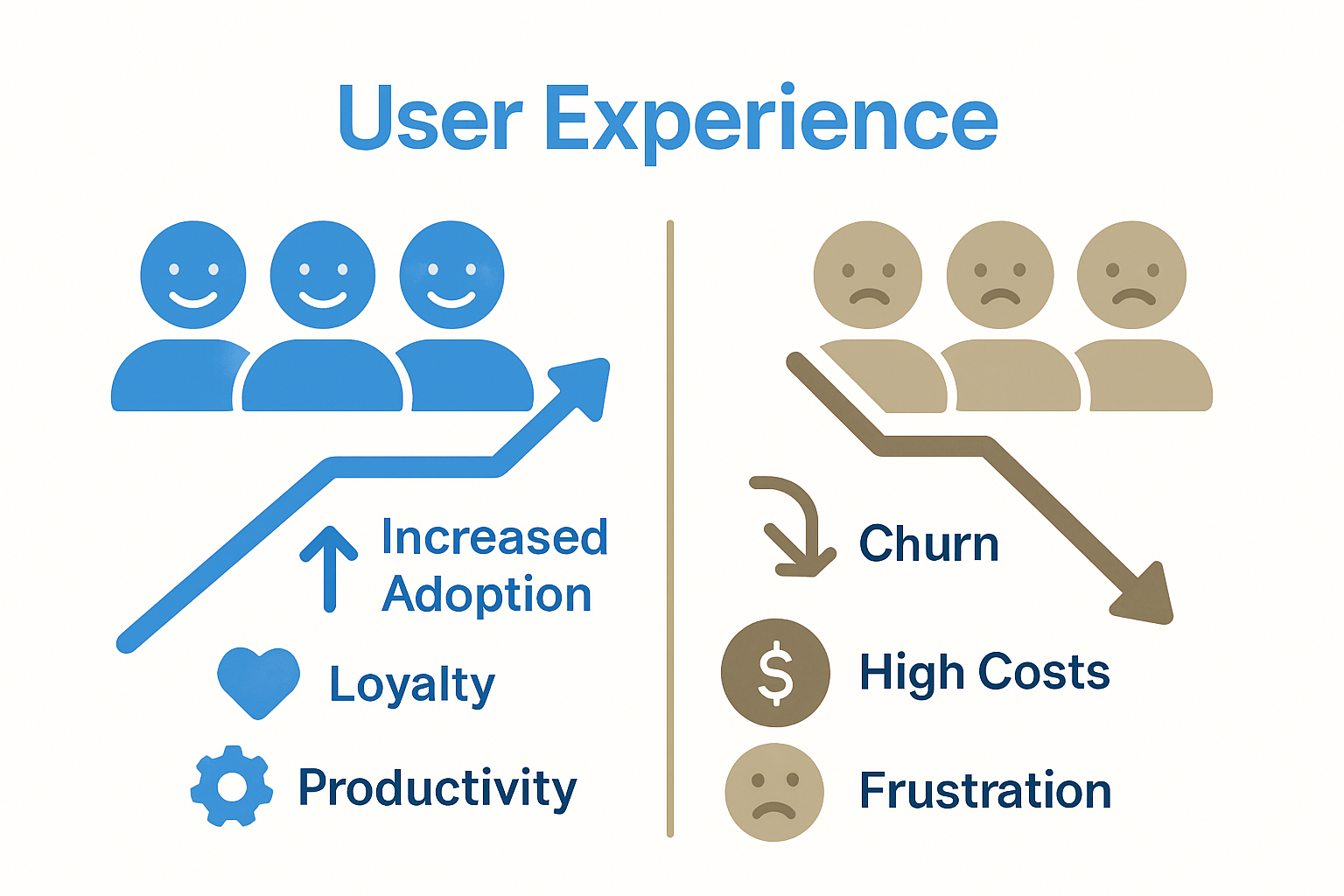
Neglecting user experience can transform a potentially successful SaaS product into a costly failure. According to Wikipedia, poor UX directly leads to diminished product usage, negative user perceptions, and potential loss of customers, ultimately threatening the entire business model.
The consequences of UX neglect extend far beyond simple user frustration. Research on the aesthetic-usability effect reveals that users inherently perceive more aesthetic and intuitive designs as more trustworthy and functional. When companies ignore this critical psychological principle, they risk creating products that users fundamentally distrust and quickly abandon.
Specific risks of neglecting user experience include:
- Dramatically increased customer acquisition costs
- Higher customer churn rates
- Reduced user engagement and satisfaction
- Negative brand reputation and market positioning
- Decreased competitive advantage
- Increased customer support expenses
The financial implications of poor UX are substantial. Companies that fail to prioritize user experience often find themselves trapped in a cycle of constant firefighting—spending more resources fixing user complaints, handling support tickets, and struggling to retain customers than they would have by investing in quality design from the start.
Want to understand how design debt can quickly erode your product’s potential? Check out our detailed guide on how design responsibility impacts product success.
Real-World Impact: SaaS Success Stories
Transformative user experience goes beyond theoretical concepts—it delivers measurable business results. According to STL Digital, SaaS companies that prioritize user experience achieve remarkable success by seamlessly integrating applications, reducing user friction, and dramatically enhancing overall productivity.
Research from Impact highlights that implementing robust user experience principles enables SaaS products to meet diverse user expectations across multiple stakeholder groups, including end-users, administrators, and support teams. This comprehensive approach has consistently resulted in increased user satisfaction and accelerated product adoption.
Key success factors emerging from world-class UX implementations include:
- Intuitive interface design that reduces learning curves
- Personalized user journeys tailored to specific user needs
- Seamless cross-platform functionality
- Proactive user support and contextual guidance
- Continuous iteration based on user feedback
- Intelligent, adaptive user interfaces
Successful SaaS companies understand that exceptional user experience is not a one-time achievement but an ongoing commitment. By continuously refining their product’s usability, they transform initial user interactions into long-term, loyal relationships that drive sustainable growth.
Curious about how design expertise can elevate your SaaS product? Explore our guide on the role of designers in SaaS to uncover strategic insights from industry experts.
Elevate Your SaaS User Experience with Expert Design Support
The article highlights how prioritizing user experience in SaaS products unlocks greater user adoption, reduces churn, and drives long-term growth. If you are dealing with unprofessional interfaces, disconnected user journeys, or unclear positioning that limit your product’s performance, you are not alone. Many SaaS teams struggle to turn complex user data into intuitive, cohesive experiences that truly resonate with their customers. Addressing these challenges requires strategic UX design focused on empathy, iteration, and seamless integration across platforms.
At The Good Side, we specialize in helping SaaS companies transform these pain points into strengths. Our senior designers bring a deep understanding of SaaS-specific workflows combined with proven user research and UI/UX expertise to deliver measurable results. Whether you need part-time consulting or fully embedded designers, we provide a flexible, fast onboarding process designed to accelerate your product’s activation, conversion, and revenue growth.
Ready to upgrade your SaaS user experience and gain a powerful competitive edge now
Discover how a free design audit and tailored collaboration with experts at The Good Side can bring clarity and cohesion to your product journey. Learn more about how we drive sustainable SaaS growth in our guide on the role of UX in SaaS and explore success stories in our guide on the role of designers in SaaS. Start your transformation today with The Good Side and experience user experience that truly works for you.
Frequently Asked Questions
What is user experience (UX) in SaaS products?
User experience in SaaS products refers to the overall journey a customer takes when interacting with the software, focusing on utility, ease of use, and efficiency to create an intuitive interface that meets user needs.
Why is prioritizing user experience important for SaaS companies?
Prioritizing user experience is crucial for SaaS companies because it can enhance user satisfaction, improve customer retention, reduce support costs, and create a competitive advantage in a crowded marketplace.
What are the key benefits of a strong UX strategy?
A strong UX strategy offers benefits such as accelerated user adoption, lower churn rates, increased customer loyalty, improved brand perception, and enhanced conversion rates, ultimately contributing to long-term product success.
What are some common risks of neglecting user experience?
Neglecting user experience can lead to increased customer acquisition costs, higher churn rates, reduced user engagement and satisfaction, a negative brand reputation, and ultimately, financial losses due to the need to continually fix user complaints.
Recommended
- Complete Guide to the Role of UX in SaaS | The Good Side Blog
- Why Invest in UI UX: A Complete Guide
- Product Design Workflow for High-Performing SaaS Teams
- What Is Scalable SaaS Design? Complete Overview
- How to Create Event Experiences That Impress Professionals - Uproduction
- Entendiendo la experiencia usuario en apps de taxi - Mallorcab