
End-to-End Design: Unifying SaaS Product Experiences
Most American SaaS teams lose up to 30 percent of productive hours due to fragmented product design and misaligned user journeys. In a market where expectations for seamless software experiences have never been higher, this gap directly impacts user satisfaction and business outcomes. Discover how a true end-to-end design approach transforms the entire product lifecycle by aligning every interaction, from the first click to long-term engagement, for both users and American organizations.
Table of Contents
- Defining End-to-End Design In SaaS
- Stages Of An End-To-End Design Process
- How End-To-End Design Transforms Product Outcomes
- End-To-End Design Versus Traditional Approaches
- Common Pitfalls When Implementing End-To-End Design
Key Takeaways
| Point | Details |
|---|---|
| Holistic User Experience | End-to-end design creates integrated, seamless user interactions across all touchpoints, enhancing engagement and satisfaction. |
| Cross-Functional Collaboration | Effective implementation requires dismantling silos and fostering team collaboration among designers, developers, and product managers. |
| Iterative Development Approach | Embracing an agile methodology allows for rapid feedback and continuous improvements throughout the product lifecycle. |
| Context-Specific Solutions | Tailoring design strategies to fit specific project contexts is crucial for addressing unique user needs and maximizing project success. |
Defining End-to-End Design in SaaS
End-to-end design in SaaS represents a holistic approach to product development that focuses on creating seamless, integrated user experiences across every interaction point. Unlike traditional design methodologies that segment user journeys, this strategy considers the entire system from initial touchpoint to final interaction, ensuring consistent and meaningful engagement throughout the product lifecycle.
At its core, end-to-end design transcends visual aesthetics, diving deep into understanding user needs, organizational goals, and technological constraints. The approach demands comprehensive alignment between user interface, service interactions, technical infrastructure, and business objectives. By embracing a strategic framework that bridges theoretical concepts with practical implementation, SaaS companies can create products that not only look compelling but also deliver exceptional, intuitive user experiences.
Successful end-to-end design requires a multidisciplinary approach integrating insights from product management, user experience design, technical architecture, and customer success. This means breaking down traditional organizational silos and fostering collaborative environments where designers, developers, and strategists work together toward a unified vision. By mapping the entire user journey and anticipating potential friction points, teams can proactively design solutions that feel natural, responsive, and deeply user-centric.
Pro Design Strategy: Conduct comprehensive user journey mapping workshops with cross-functional teams to identify and eliminate potential experience gaps before they impact your product’s performance and user satisfaction.
Stages of an End-to-End Design Process
The end-to-end design process for SaaS products follows a structured yet flexible approach that systematically navigates the systems development lifecycle. This comprehensive methodology ensures that every stage of product design is intentional, user-focused, and aligned with broader business objectives. Unlike traditional linear approaches, modern SaaS design processes emphasize iterative development and continuous improvement.
The process typically involves multiple interconnected stages. Initial Discovery focuses on understanding user needs, market requirements, and potential friction points. During the front-end development phase, teams conduct in-depth user research, create preliminary personas, and map out potential user journeys. This stage is critical for establishing a foundational understanding of the product’s purpose and target audience.
Subsequent stages include detailed design, prototyping, validation, and iterative refinement. Product designers collaborate closely with user experience experts, developers, and stakeholders to transform initial insights into tangible design solutions. This involves creating wireframes, interactive prototypes, conducting user testing, and continuously refining the product based on real-world feedback. The goal is to develop a cohesive, intuitive product that not only meets functional requirements but also delivers an exceptional user experience.
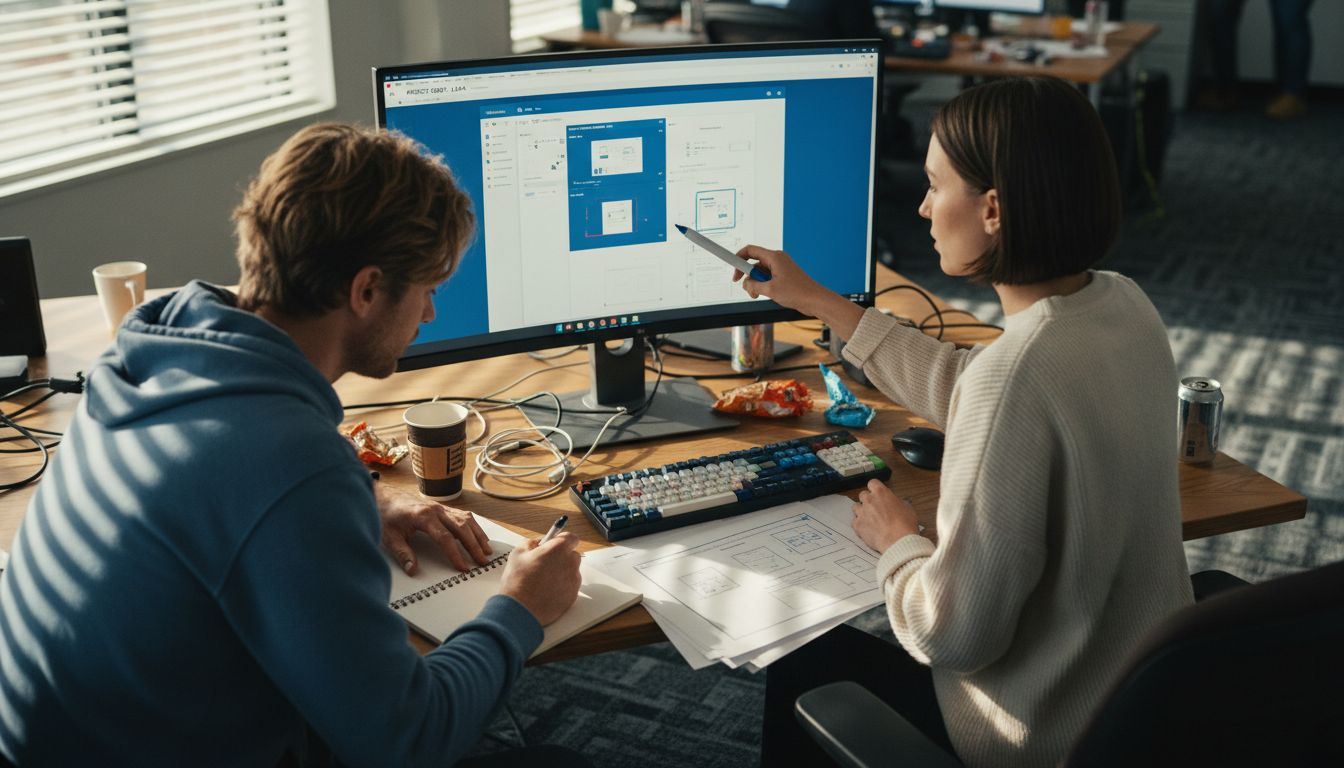
Pro Design Strategy: Implement regular cross-functional design review sessions where product managers, designers, and developers collectively analyze user feedback and prototype iterations to maintain alignment and accelerate product improvements.
How End-to-End Design Transforms Product Outcomes
End-to-end design fundamentally transforms product outcomes by creating a comprehensive, interconnected approach that addresses the entire lifecycle of software architecture. This methodology goes beyond traditional design practices by ensuring that every aspect of the product—from initial conception to final deployment—is strategically aligned with user needs, business objectives, and technological capabilities. The result is a more cohesive, intuitive, and high-performing product that delivers exceptional value to users.
The transformative power of end-to-end design becomes evident in its ability to break down organizational silos and create a unified vision. By implementing a structured approach that encompasses design, development, and deployment phases, companies can dramatically improve product scalability, maintainability, and user satisfaction. This holistic perspective allows teams to anticipate potential challenges, optimize user experiences, and create products that are not just functional, but truly remarkable.
Moreover, end-to-end design drives significant business outcomes by reducing development complexity, minimizing redundant work, and accelerating time-to-market. When designers, developers, and stakeholders collaborate seamlessly throughout the product lifecycle, they can quickly iterate, adapt to user feedback, and create more responsive and innovative solutions. The approach enables organizations to develop products that are not only technically robust but also deeply resonant with user expectations and market demands.
Pro Design Strategy: Establish a cross-functional design council that meets regularly to review product performance, user feedback, and alignment between design vision and actual user experiences, ensuring continuous improvement and strategic product evolution.
End-to-End Design Versus Traditional Approaches
Traditional design approaches typically operate through rigid, sequential processes that segment product development into discrete, often disconnected stages. In contrast, end-to-end design represents a more dynamic and integrated methodology that challenges conventional software lifecycle standards by emphasizing continuous collaboration, adaptability, and holistic problem-solving. Where traditional methods create barriers between design, development, and deployment, end-to-end design breaks down these organizational silos, creating a more fluid and responsive product development ecosystem.
The fundamental difference lies in flexibility and approach to complexity. Agile methodologies have demonstrated that less detailed front-end planning can actually improve project performance, a key principle of end-to-end design. Traditional approaches often rely on extensive upfront documentation and rigid specifications, which can slow innovation and limit adaptability. End-to-end design, however, embraces iterative development, allowing teams to quickly pivot, incorporate user feedback, and evolve the product in real-time.
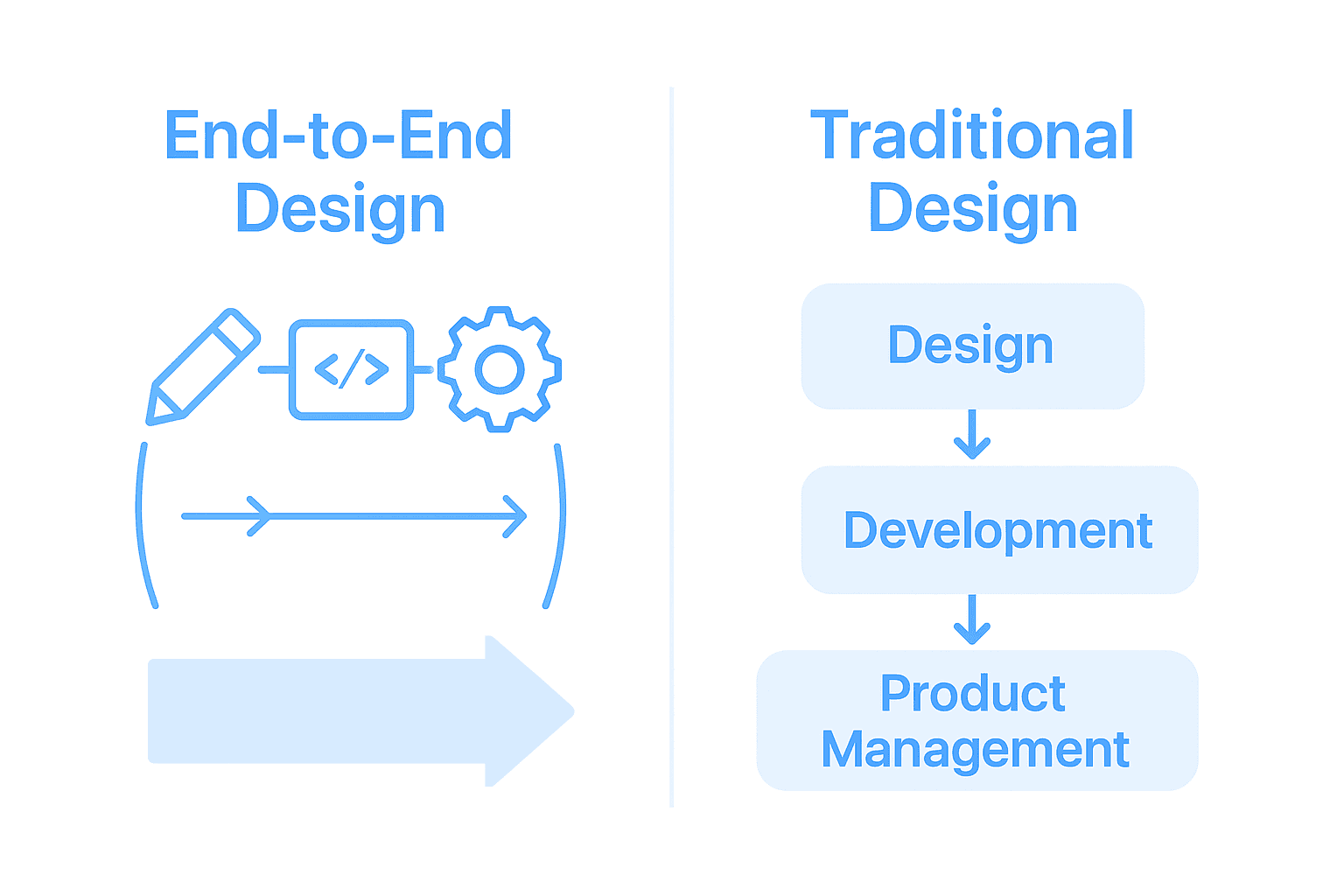
Moreover, end-to-end design fundamentally reimagines the relationship between different stages of product development. Instead of viewing design, development, and deployment as sequential steps, this approach sees them as interconnected, mutually informing processes. This means designers are no longer isolated from technical implementation, developers aren’t disconnected from user experience considerations, and deployment isn’t a final, static event but a continuous optimization journey. By creating this integrated ecosystem, end-to-end design enables more responsive, user-centric, and technologically innovative products.
Here’s a concise summary of the key differences between end-to-end design and traditional approaches in SaaS:
| Aspect | End-to-End Design | Traditional Design |
|---|---|---|
| Team Collaboration | Continuous and cross-functional | Sequential and siloed |
| Adaptability | Highly iterative, user-driven | Rigid, defined upfront |
| Focus | Entire user journey | Discrete development phases |
| Impact on Innovation | Accelerates by rapid feedback | Slows due to fixed plans |
Pro Design Strategy: Implement cross-functional design sprints that bring together designers, developers, and product managers to collaboratively solve challenges, ensuring seamless communication and shared understanding throughout the product development lifecycle.
Common Pitfalls When Implementing End-to-End Design
Implementing end-to-end design is not without significant challenges. Organizations often struggle with fundamental misconceptions about the approach, leading to ineffective execution. The complexity of customizing SaaS applications across multiple tenants highlights the intricate nature of this design strategy, revealing that a one-size-fits-all approach can rapidly derail even the most well-intentioned design efforts. Teams frequently underestimate the depth of collaboration and systemic thinking required to truly implement end-to-end design principles.
One critical pitfall emerges from an inadequate understanding of context-specific design requirements. Research demonstrates significant variability in how front-end design characteristics impact project success, suggesting that blindly applying standard methodologies without considering unique organizational contexts can lead to catastrophic design failures. Common mistakes include over-standardizing processes, neglecting team-specific dynamics, and failing to create flexible frameworks that can adapt to evolving project needs.
Another substantial challenge is maintaining genuine cross-functional collaboration. Many organizations mistake end-to-end design for superficial interdepartmental meetings or sporadic communication. True implementation requires dismantling deeply entrenched organizational silos, creating transparent communication channels, and developing shared mental models that transcend traditional departmental boundaries. This means designers must understand technical constraints, developers must appreciate user experience nuances, and product managers must facilitate seamless integration of diverse perspectives.
The following table outlines common pitfalls in implementing end-to-end design and strategies to address them:
| Pitfall | Consequence | Practical Solution |
|---|---|---|
| Over-standardization | Stifled innovation, rigid products | Build adaptable frameworks |
| Poor cross-team alignment | Miscommunication, repeated errors | Foster open communication channels |
| Ignoring context | Missed user needs, wasted effort | Tailor solutions for each project |
| Superficial collaboration | Lack of shared vision | Rotate team roles regularly |
Pro Design Strategy: Create a rotating design council with mandatory cross-functional representation, ensuring that no single perspective dominates and that every team member gains a holistic understanding of the product development ecosystem.
Transform Your SaaS Product with Expert End-to-End Design
End-to-end design is key to unifying complex SaaS user journeys and breaking down organizational silos as detailed in the article. If your product struggles with disconnected interfaces, unclear positioning, or gaps in cross-team collaboration these challenges can slow innovation and user adoption. At The Good Side Oy we specialize in turning fragmented SaaS experiences into seamless, high-performing products that drive activation and revenue. Our senior designers bring expertise in UI/UX design, user research, and strategic positioning to deliver holistic end-to-end user journey optimization that directly addresses these critical pain points.
Ready to eliminate the common pitfalls like poor cross-team alignment and over-standardized processes that hold back your SaaS product? Start with a free design audit and engage flexible design support from part-time consulting to fully embedded teams. Visit The Good Side Oy now to see how our proven approach accelerates your go-to-market and builds sustainable growth. Partner with experts who understand the full SaaS lifecycle and turn your product vision into a reality through strategic design and collaboration. Don’t wait to transform your user experience and boost your product outcomes today.
Frequently Asked Questions
What is end-to-end design in SaaS?
End-to-end design in SaaS is a holistic approach to product development that focuses on creating seamless user experiences across every interaction point of the product. It involves understanding user needs, organizational goals, and technological constraints to ensure a unified product ecosystem.
How does end-to-end design differ from traditional design approaches?
End-to-end design emphasizes continuous collaboration and adaptability, while traditional approaches often follow rigid, sequential processes. This dynamic methodology allows for more responsive product development that is aligned with user feedback and market demands.
What are the key stages in the end-to-end design process?
The key stages in the end-to-end design process typically include initial discovery, detailed design, prototyping, validation, and iterative refinement, all aimed at developing products that are both functional and provide exceptional user experiences.
What are common pitfalls organizations face when implementing end-to-end design?
Common pitfalls include over-standardization, poor cross-team alignment, ignoring context, and superficial collaboration. Addressing these challenges requires creating adaptable frameworks, fostering open communication, and ensuring genuine collaboration across teams.