
Effective UX Collaboration Steps for SaaS Success
Over 80 percent of american SaaS teams report that misaligned goals and poor collaboration slow down product development. In a fast-moving software market where user experience drives loyalty, even small setbacks can cost time and customers. This guide uncovers practical steps to help your team work together, define clear objectives, and create seamless products that keep every stakeholder on the same page.
Table of Contents
- Step 1: Define Shared Goals And UX Objectives
- Step 2: Map Stakeholder Roles And Responsibilities
- Step 3: Establish Communication And Feedback Channels
- Step 4: Develop User-Centric Workflows Together
- Step 5: Validate And Iterate Through Collaborative Testing
Quick Summary
| Key Point | Explanation |
|---|---|
| 1. Define clear UX goals | Organize workshops to establish specific, measurable objectives connecting user needs to business outcomes, ensuring alignment across the team. |
| 2. Map stakeholder roles clearly | Use a Responsibility Assignment Matrix to define responsibilities, enhancing clarity and preventing confusion among team members during the UX process. |
| 3. Establish effective communication channels | Implement multiple communication platforms and regular meetings to promote transparency and facilitate timely feedback throughout product development. |
| 4. Develop workflows collaboratively | Create user-centric workflows through cross-functional workshops to optimize user interactions, ensuring both user needs and business goals are met. |
| 5. Validate through inclusive testing | Conduct collaborative testing sessions involving diverse team members and users to refine UX based on genuine feedback, avoiding confirmation bias. |
Step 1: Define shared goals and UX objectives
Defining clear and aligned goals is the foundation for successful UX collaboration in SaaS product development. This critical step transforms disconnected perspectives into a unified vision that drives strategic design decisions and ensures every team member understands the core user experience objectives.
To create effective shared goals, start by organizing a collaborative workshop that brings together product managers, designers, engineers, and key stakeholders. During this session, use structured exercises to uncover collaborative research objectives that connect user needs with business outcomes. Begin by mapping out your target user personas, discussing their primary pain points, and identifying specific metrics that demonstrate UX success. For instance, aim for concrete goals like reducing user onboarding time by 30%, improving feature adoption rates, or increasing user engagement through more intuitive interface design.
A crucial warning when defining UX objectives is avoiding vague or generic statements. Instead, make your goals specific, measurable, and directly tied to user and business value. Your objectives should clearly articulate how improved UX will drive tangible results such as increased conversion rates, reduced customer support tickets, or enhanced user satisfaction scores. By maintaining this laser focus, you ensure that every team member understands not just what needs to be achieved, but why it matters.
Step 2: Map stakeholder roles and responsibilities
Mapping stakeholder roles and responsibilities is a critical step in ensuring seamless UX collaboration and preventing potential communication breakdowns. This process creates a clear framework that defines who does what, when, and how throughout the product design journey.
Begin by creating a comprehensive stakeholder map that visualizes all team members involved in the UX process. Utilize a Responsibility Assignment Matrix to clarify each participant’s level of involvement. Typically, this matrix includes four key roles: Responsible (who does the work), Accountable (who makes final decisions), Consulted (who provides input), and Informed (who needs to be updated). For a SaaS UX project, this might include product managers, designers, engineers, customer support representatives, and marketing team members.
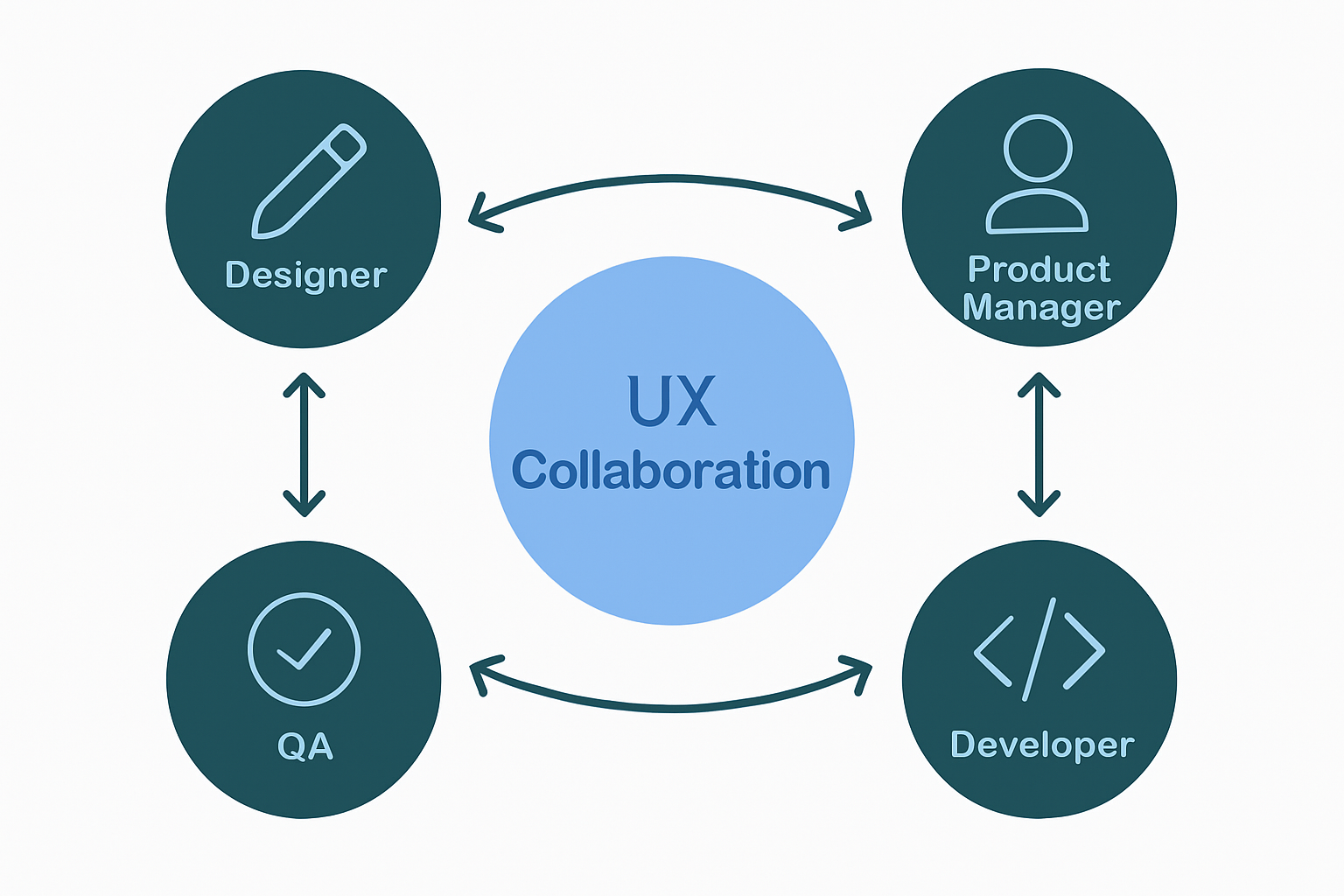
A critical warning when mapping roles is avoiding ambiguity. Each stakeholder should have a crystal clear understanding of their specific contributions and decision making authority. Document these responsibilities in a shared digital workspace that all team members can easily access and reference. By establishing this transparent framework early, you eliminate potential confusion, reduce redundant work, and create a streamlined collaborative environment where everyone understands their unique role in delivering an exceptional user experience.
Step 3: Establish communication and feedback channels
Establishing robust communication and feedback channels is fundamental to maintaining smooth UX collaboration and ensuring all team members stay aligned throughout the product development process. This step transforms isolated work into a connected, transparent workflow that supports rapid iteration and shared understanding.
Implement a collaborative workflow that integrates multiple communication tools to create real-time visibility across your team. Leverage platforms like Slack for instant messaging, Jira for project tracking, and shared digital workspaces that enable cross-functional collaboration among product managers, designers, engineers, and stakeholders. Schedule regular sync up meetings that combine video conferences with structured async updates, ensuring everyone has multiple channels to share insights, ask questions, and provide feedback.
A critical warning is avoiding communication silos that can derail project momentum. Establish clear protocols for when to use each communication channel. For example, use Slack for quick questions, weekly team meetings for deeper discussions, and project management tools for tracking specific tasks and decisions. By creating a transparent communication ecosystem, you will reduce misunderstandings, accelerate problem solving, and build a culture of open collaboration that drives exceptional UX design.
Step 4: Develop user-centric workflows together
Developing user-centric workflows is a collaborative process that transforms abstract design concepts into practical, intuitive product experiences. This critical step brings together your entire team to create seamless user journeys that align with both user needs and business objectives.
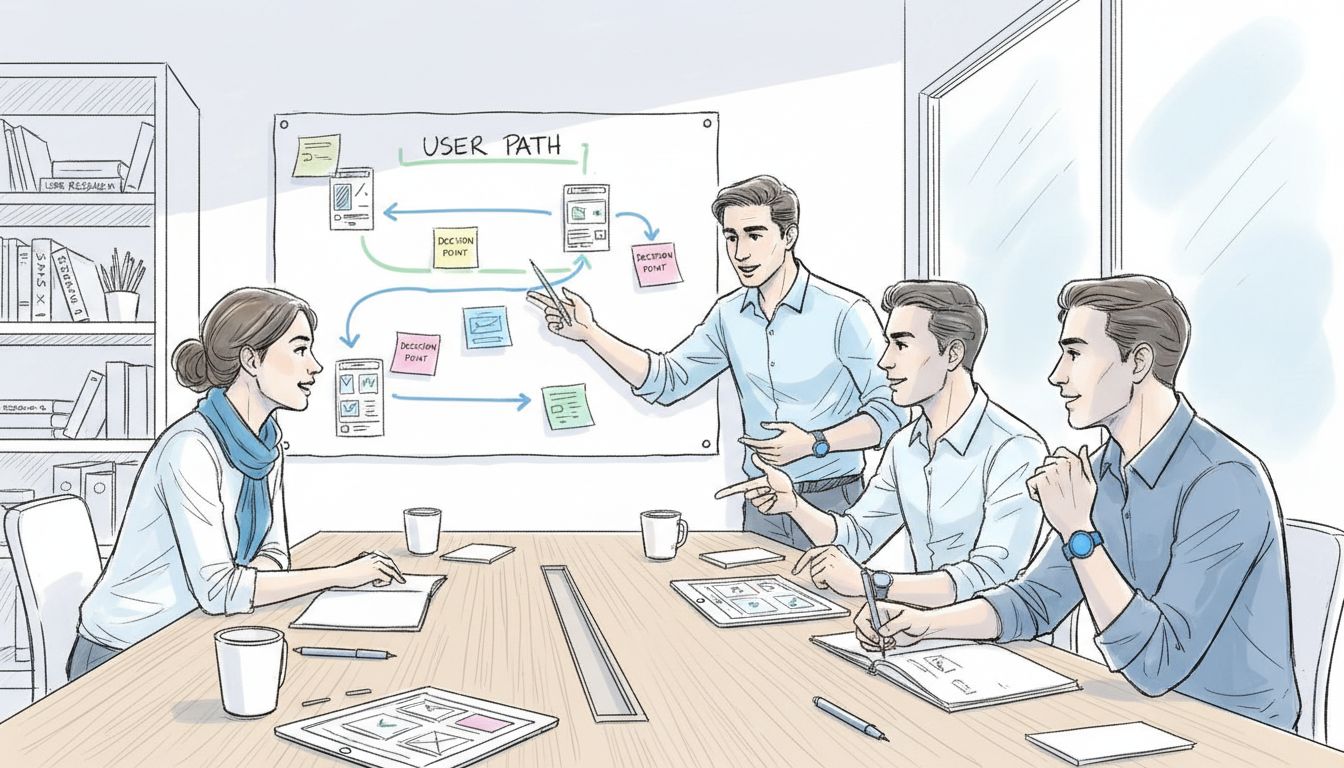
Begin by implementing a collaborative workflow that integrates social software and service management tools to map out user interactions systematically. Organize cross-functional design workshops where product managers, designers, and engineers collectively walk through each user touchpoint, identifying potential friction points and opportunities for optimization. Use open collaboration techniques that encourage team members to contribute diverse perspectives and innovative solutions. Break down the user journey into distinct stages, mapping out specific interactions, emotional states, and potential user challenges at each step.
A critical warning is avoiding assumptions about user behavior. Always ground your workflow design in actual user research and data. Prioritize creating flexible workflows that can adapt to different user scenarios and skill levels. By fostering a collaborative approach that puts user experience at the center of your design process, you will create more intuitive, engaging product experiences that truly meet user needs and drive long-term product success.
Step 5: Validate and iterate through collaborative testing
Collaborative testing transforms product development from a linear process into a dynamic, user-centered journey of continuous improvement. This critical stage brings together insights from across your team to rigorously validate and refine your user experience through systematic and inclusive testing approaches.
Leverage stakeholder mapping techniques to represent customer interests during your testing process. Assemble a diverse testing team that includes product managers, designers, engineers, and actual users to create a comprehensive evaluation framework. Design multiple testing scenarios that simulate real world user interactions, utilizing methods like usability testing, A/B experiments, user interviews, and prototype feedback sessions. Internal stakeholder mapping can help understand relationships and interests that impact how you interpret and act on testing results.
A critical warning is avoiding confirmation bias during testing. Encourage team members to challenge assumptions, embrace unexpected findings, and approach feedback with genuine curiosity. Create a safe environment where all observations are valued and potential improvements are viewed as opportunities for innovation. By treating testing as a collaborative learning experience, you will continuously refine your product, ensuring it remains responsive to user needs and delivers exceptional value.
Unlock Seamless UX Collaboration for SaaS Growth
Are your SaaS teams struggling with unclear roles, scattered communication, and disjointed user workflows? The article “Effective UX Collaboration Steps for SaaS Success” highlights the importance of defining shared goals, mapping stakeholder responsibilities, and establishing robust feedback channels to create user-centric, measurable experiences. These core concepts address the frustration many teams face when trying to build cohesive and intuitive products that truly engage users and boost business results.
The Good Side Oy specializes in transforming these challenges into strengths by partnering with SaaS companies to deliver expert UI/UX design, user research, and strategic positioning. Our senior designers guide your team through every phase from defining objectives to validating iterative testing ensuring your product aligns perfectly with user needs and business goals.
Start removing collaboration roadblocks today with a free design audit.
Explore how our flexible engagements help you accelerate product success without the delays of traditional hiring. Visit The Good Side now to connect with SaaS-focused talent who turn complex UX workflows into smooth user journeys. Don’t let poor collaboration slow your growth. Take action and elevate your SaaS product’s user experience today.
Frequently Asked Questions
What are the key steps to define shared goals for UX collaboration in SaaS?
Defining shared goals involves conducting a collaborative workshop with team members from various roles such as product managers and designers. Map out target user personas, identify their key pain points, and establish specific, measurable objectives to align everyone’s focus.
How can I effectively map stakeholder roles and responsibilities in a UX project?
Create a comprehensive stakeholder map that outlines each team member’s responsibilities using a Responsibility Assignment Matrix. Clearly define who is Responsible, Accountable, Consulted, and Informed to streamline communication and prevent misunderstandings.
What tools can enhance communication and feedback channels in UX collaboration?
Utilize collaboration tools like instant messaging platforms for quick questions, project management software for task tracking, and shared workspaces for documentation. Establish clear protocols for when to use each tool to ensure effective communication and minimize silos.
How do I develop user-centric workflows collaboratively?
Organize cross-functional design workshops that include all relevant team members to map out user interactions and identify potential issues. Focus on creating flexible workflows by basing them on actual user research and data to ensure they meet user needs.
What is the importance of validating and iterating through collaborative testing?
Collaborative testing combines insights from different team members and real users to refine the product. Design multiple testing scenarios and create a safe environment for team discussions to continuously improve the user experience based on feedback.
How can I ensure shared understanding among team members throughout the UX process?
Establish regular sync-up meetings and utilize digital workspaces for documentation to maintain transparency. Use these platforms to share insights and updates, ensuring every member understands their role and the project’s progress.