
Collaborative Design: Driving SaaS Product Growth
Over 85 percent of mid-sized SaaS companies report that collaborative design outperforms traditional siloed processes in user satisfaction and growth. American product teams are increasingly shifting toward dynamic, cross-functional collaboration to break barriers and accelerate innovation. For product managers aiming to align global teams and boost results, discovering how collaborative design transforms workflows can reveal powerful new ways to create value and elevate user experience.
Table of Contents
- What Collaborative Design Really Means
- Types Of Collaborative Design In SaaS
- Key Principles And Team Dynamics
- How Collaborative Design Powers Growth
- Common Challenges And How To Overcome Them
Key Takeaways
| Point | Details |
|---|---|
| Embrace Collaborative Design | Shift from siloed approaches to engaging multidisciplinary teams enhances creativity and innovation. |
| Utilize Cross-Functional Strategies | Incorporating diverse perspectives through internal, cross-department, and external collaboration fosters holistic product development. |
| Foster Psychological Safety | Create an environment where team members feel empowered to share ideas freely and constructively, enhancing collaboration. |
| Address Common Challenges | Implement structured feedback mechanisms and transparent communication protocols to overcome power dynamics and ensure equitable participation. |
What Collaborative Design Really Means
Collaborative design represents a radical shift from traditional siloed product development approaches. It transforms design from an isolated function into a dynamic, interconnected process where multidisciplinary teams unite their unique skills and perspectives. At its core, collaborative design is about breaking down organizational barriers and creating spaces where creativity flows freely across different domains and expertise levels.
In practice, collaborative design means expanding design participation beyond traditional boundaries. It’s not just about designers creating interfaces, but about involving researchers, engineers, product managers, and even end users in a holistic design ecosystem. This approach recognizes that great product experiences emerge from collective intelligence rather than individual brilliance. By integrating diverse viewpoints, teams can uncover nuanced insights that might otherwise remain hidden.
The most effective collaborative design strategies incorporate deliberate mechanisms for cross-functional engagement. This involves establishing clear communication protocols, creating shared design systems, and developing collaborative tools that enable seamless knowledge exchange. Teams must cultivate psychological safety where every participant feels empowered to contribute ideas without fear of judgment. The goal isn’t consensus, but rather constructive dialogue that synthesizes different perspectives into more robust design solutions.
Pro tip: Schedule regular cross-functional design workshops where team members from different departments can collaboratively sketch, prototype, and critique potential solutions, fostering a culture of shared ownership and creative problem solving.
Types of Collaborative Design in SaaS
SaaS product development encompasses several distinct collaborative design approaches, each with unique characteristics and strategic value. Collaborative design methods range from synchronous to asynchronous interactions, enabling teams to work flexibly and effectively across different contexts and constraints. Understanding these approaches allows product teams to select the most appropriate collaboration strategy for their specific project needs and organizational dynamics.

The primary types of collaborative design in SaaS include internal team collaboration, cross-department collaboration, and external stakeholder engagement. Internal team collaboration focuses on designers, product managers, and engineers working together seamlessly, breaking down traditional departmental silos. Cross-department collaboration extends this model by integrating insights from marketing, customer support, and sales teams, ensuring a holistic approach to product design that considers multiple perspectives and organizational goals.
External collaboration represents another critical dimension of SaaS design strategies. This involves directly engaging users, beta testers, and client representatives in the design process. By leveraging cloud-based collaboration tools, teams can create interactive feedback loops that transform user insights into tangible product improvements. These collaborative approaches enable rapid iteration, reduce development risks, and create products that genuinely resonate with end-user needs.
Here’s a comparison of three primary types of collaborative design in SaaS environments:
| Approach | Key Participants | Typical Tools Used | Strategic Benefit |
|---|---|---|---|
| Internal Team Collaboration | Designers, product managers, engineers | Design systems, prototyping tools | Faster iteration, silo reduction |
| Cross-department Collaboration | Marketing, sales, support, product teams | Shared roadmaps, communication platforms | Broader perspective, customer alignment |
| External Stakeholder Engagement | End users, clients, beta testers | Cloud collaboration suites, feedback tools | User-driven improvements, risk reduction |
Pro tip: Implement a rotating collaborative design schedule where team members from different departments participate in design sprints, ensuring cross-pollination of ideas and breaking down traditional communication barriers.
Key Principles and Team Dynamics
Successful collaborative design in SaaS hinges on creating an environment that balances structure with creative flexibility. Disciplined design thinking methodologies provide the framework for teams to navigate complex product challenges, ensuring that innovation remains purposeful and strategic. The most effective teams understand that creativity thrives within well-defined boundaries, using structured processes to channel collective intelligence toward meaningful solutions.
Cross-disciplinary collaboration demands clear role definitions and robust communication strategies. Team members must develop a shared language that transcends departmental jargon, creating an inclusive environment where diverse perspectives are not just heard but actively integrated. This approach requires intentional practices that promote psychological safety, allowing team members to share ideas without fear of judgment or hierarchical pushback. The goal is to create a collaborative ecosystem where expertise is respected, and collective problem-solving becomes the default mode of operation.
Building high-performance collaborative teams involves more than technical skills. Effective team dynamics rely on mutual respect and a commitment to shared goals. This means developing communication protocols that encourage open dialogue, creating feedback mechanisms that feel constructive rather than critical, and establishing decision-making processes that balance individual contributions with collective wisdom. Successful teams learn to navigate differences, transform potential conflicts into generative discussions, and maintain a growth-oriented mindset.
Pro tip: Implement quarterly cross-functional workshops where team members rotate through different roles, gaining insights into each other’s perspectives and breaking down departmental silos.
How Collaborative Design Powers Growth
Collaborative design serves as a critical catalyst for SaaS product growth, transforming traditional development approaches into dynamic, responsive strategies. Operational productivity significantly improves when teams break down departmental silos and create integrated workflows that accelerate innovation and market responsiveness. By fostering a holistic approach to product development, companies can dramatically reduce time-to-market and create more resonant user experiences.
The strategic integration of design, engineering, and product management functions enables SaaS companies to rapidly iterate and adapt to evolving customer needs. This approach goes beyond mere coordination, creating a synergistic environment where diverse perspectives generate more sophisticated, user-centric solutions. Teams that embrace collaborative methodologies can quickly identify and resolve potential friction points, turning potential challenges into opportunities for product refinement and competitive differentiation.
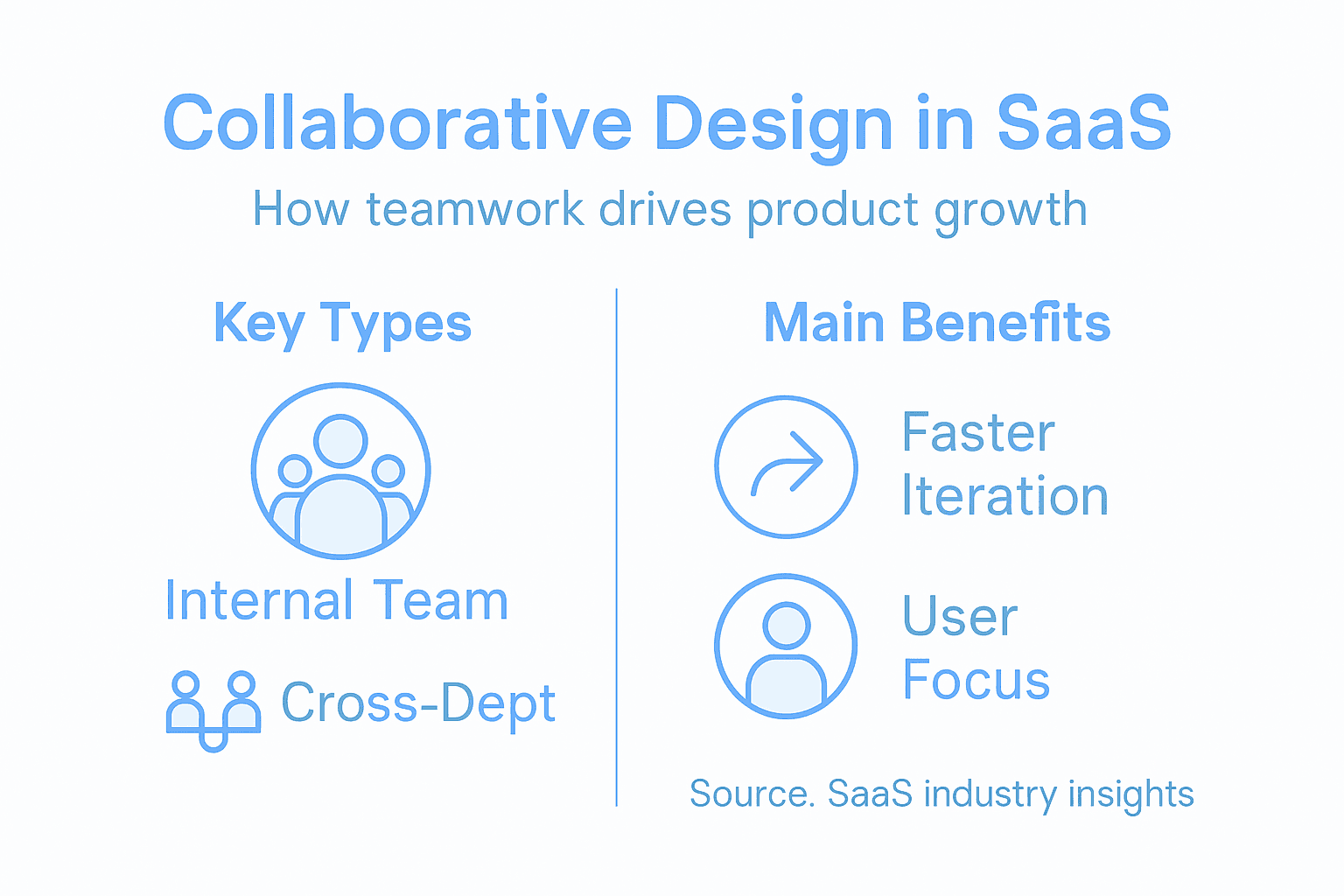
Strategic collaboration drives sustainable growth by embedding cross-functional insights into every stage of product development. This means moving beyond traditional linear processes to create adaptive, responsive design ecosystems. Successful SaaS organizations recognize that collaboration is not just a workflow optimization technique, but a fundamental strategy for continuous improvement, innovation, and maintaining a competitive edge in rapidly changing technology landscapes.
Pro tip: Create shared digital workspaces that facilitate real-time collaboration, documentation, and knowledge sharing across different product development teams.
Common Challenges and How to Overcome Them
Collaborative design in SaaS environments is fraught with complex interpersonal and structural challenges that can derail even the most well-intentioned teams. Creating shared understanding among diverse stakeholders requires deliberate strategies that go beyond traditional communication methods. The fundamental issue lies in bridging different professional languages, perspectives, and institutional priorities while maintaining a unified vision for product development.
One of the most persistent challenges is managing unequal contributions and potential power dynamics within collaborative teams. Some team members might dominate discussions, while others remain hesitant to share critical insights. AI-driven feedback mechanisms can help balance team interactions, providing objective assessments of participation, identifying communication bottlenecks, and creating more equitable collaborative environments. By introducing structured feedback loops, organizations can ensure that every team member’s perspective is valued and integrated into the design process.
Overcoming collaborative design challenges requires a multifaceted approach that combines technological tools, robust communication protocols, and a culture of mutual respect. This means establishing clear role definitions, creating transparent decision-making processes, and developing mechanisms for resolving conflicts constructively. Leaders must actively work to create psychological safety, where team members feel empowered to share divergent opinions without fear of retribution or marginalization.
The following table summarizes key challenges in collaborative design and practical solutions:
| Main Challenge | Impact on Teams | Practical Solution |
|---|---|---|
| Unequal contribution | Reduced idea diversity | Structured participation rules |
| Power dynamics | Suppressed innovation | Anonymous feedback mechanisms |
| Communication barriers | Misaligned objectives | Shared language workshops |
| Conflict resolution | Delayed decisions | Transparent protocols |
Pro tip: Implement quarterly collaborative health assessments that anonymously measure team dynamics, communication effectiveness, and individual satisfaction to proactively identify and address potential collaboration barriers.
Unlock the Power of Collaborative Design with Expert SaaS Design Leadership
Collaborative design drives SaaS product growth by breaking down silos and embedding diverse perspectives into every phase of development. If your team struggles with alignment, communication barriers, or translating rich user insights into actionable product improvements, The Good Side Oy offers a proven solution. Our seasoned designers embed seamlessly within product and engineering teams to overcome the typical challenges of uneven participation and fragmented workflows highlighted in the article. We transform design from a standalone task into a strategic growth driver focused on activation, adoption, and revenue impact.
Discover how outcome-driven, fractional design leadership can accelerate your SaaS product’s growth trajectory. Visit The Good Side to learn how our embedded design partners help you navigate complex collaboration dynamics and build products that are easier to understand, use, and grow. Get in touch today to empower your teams with senior design expertise precisely when you need it and start making better product decisions faster.
Frequently Asked Questions
What is collaborative design in SaaS?
Collaborative design in SaaS refers to an integrated approach where multidisciplinary teams work together in the product development process, breaking down traditional silos to enhance creativity and innovation.
How does collaborative design improve product development?
Collaborative design enhances product development by leveraging diverse perspectives, fostering better communication, and creating more user-centric solutions, which can lead to faster iteration and reduced time-to-market.
What are the key types of collaboration in SaaS product design?
The key types of collaboration in SaaS product design include internal team collaboration (designers and engineers), cross-department collaboration (involving marketing and support), and external stakeholder engagement (involving end users and clients).
What challenges do teams face in collaborative design and how can they be overcome?
Common challenges include unequal contributions, communication barriers, and power dynamics. These can be addressed through structured participation rules, shared language workshops, and transparent decision-making processes.