
Best Product Design Platforms – Expert Comparison 2025
SaaS teams often need product design to move faster and deliver clear results, but finding the right fit can feel overwhelming. Some companies want quick turnaround and full control, while others value expert insight or flexibility to scale up or down. Models range from subscriptions to all-in services to rapid audits, each with its own quirks and strengths. With so many options now promising senior talent and results you can measure, it helps to see how leading choices stack up side by side. Which approach best matches your goals and work style, and where does each one shine
Table of Contents
Goodside
At a Glance
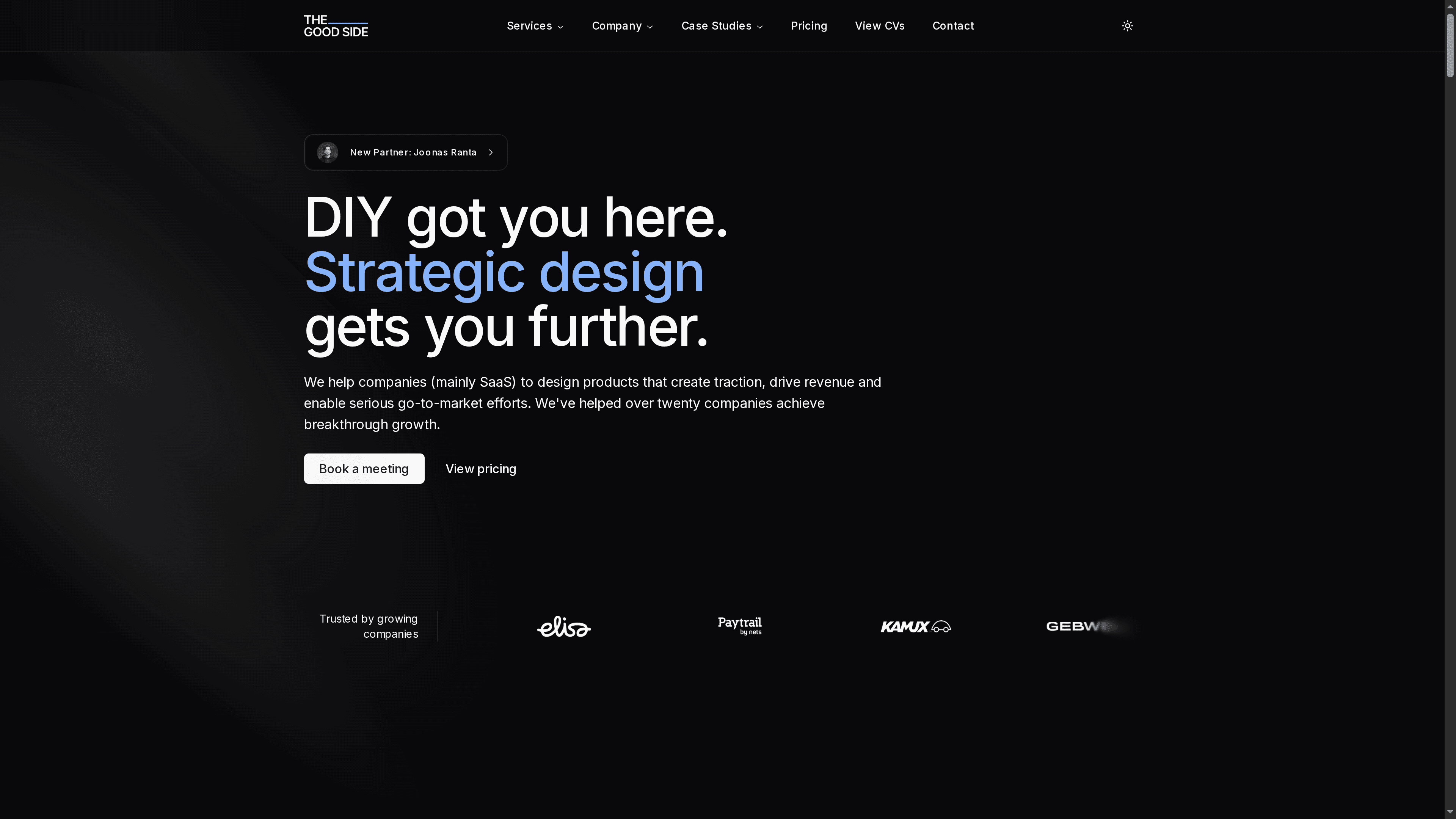
Goodside is a strategic design partner for SaaS companies, helping teams turn unprofessional interfaces, disconnected user journeys, and unclear positioning into cohesive, high-performing products. The team emphasizes fast starts with senior, SaaS-specialized designers and flexible engagement models that drive activation, conversions, and revenue—typically delivering integrated results within two weeks after consultation and matching. If you need rapid, senior-level design capacity without the friction of hiring, Goodside delivers clear, measurable impact.
Core Features
Goodside’s core capabilities center on rapid, senior-driven design engagements tailored to SaaS challenges. A streamlined process begins with a free design audit, followed by rapid talent matching, a chemistry check, and integration within two weeks. The offering includes matching with senior designers who specialize in SaaS, flexible engagement options from part-time consulting to fully embedded teams, and access to specialists across UX research, product design, UI design, and service design. Pricing is transparent at €110 per hour with detailed quotes available to align scope and outcomes.
Pros
- Fast onboarding: Goodside’s streamlined process gets designers integrated in about two weeks, enabling immediate momentum on priority product issues.
- Senior, specialized talent: You gain access to a network of over 100 SaaS-focused designers, ensuring expertise tailored to subscription products and complex user flows.
- Flexible engagement models: Whether you need part-time help, project-based work, or a fully embedded designer, Goodside adapts to your team size and timeline.
- Strategic depth: The team combines UI/UX design, user research, and positioning work to drive product activation and revenue, not just surface polish.
- Transparent pricing: Hourly rates and clear quotes reduce billing surprises and make ROI easier to forecast.
Who It’s For
Goodside is designed for SaaS companies and digital product teams that need senior design muscle quickly—startups preparing to scale, product teams facing retention challenges, or growth teams looking to lift activation and conversions. If your priority is product growth and you want experts who know subscription dynamics and complex user journeys, Goodside is a practical fit. It’s less relevant for non-digital product businesses.
Unique Value Proposition
Goodside’s unique value is its combination of speed, seniority, and SaaS focus. Rather than a long hiring pipeline or a junior-heavy agency model, Goodside matches you with experienced designers who immediately address core product problems—UI professionalism, broken onboarding flows, and unclear positioning. That concentrated senior talent, supported by a 100+ designer network, creates a predictable path from audit to measurable outcomes. The hourly pricing model at €110/hour is intentionally transparent: it aligns incentives, lets you scale effort up or down, and ensures you pay for senior expertise only when you need it. In practice that means faster product improvement cycles, clearer design strategy, and a direct line to revenue-impacting work—advantages many generic design firms can’t consistently deliver.
Real World Use Case
A SaaS startup facing poor onboarding retention engages Goodside to redesign its first-time user flow. Within two weeks the team completes an audit, matches a senior UX researcher and product designer, and iterates on wireframes that reduce friction and clarify value—resulting in faster activation and measurable retention gains.
Pricing
Goodside charges €110 per hour, with scope and duration adjustable per project. No fixed total is provided without a detailed quote; clients receive tailored estimates based on workload.
Website: https://goodside.fi
Creatifly
At a Glance
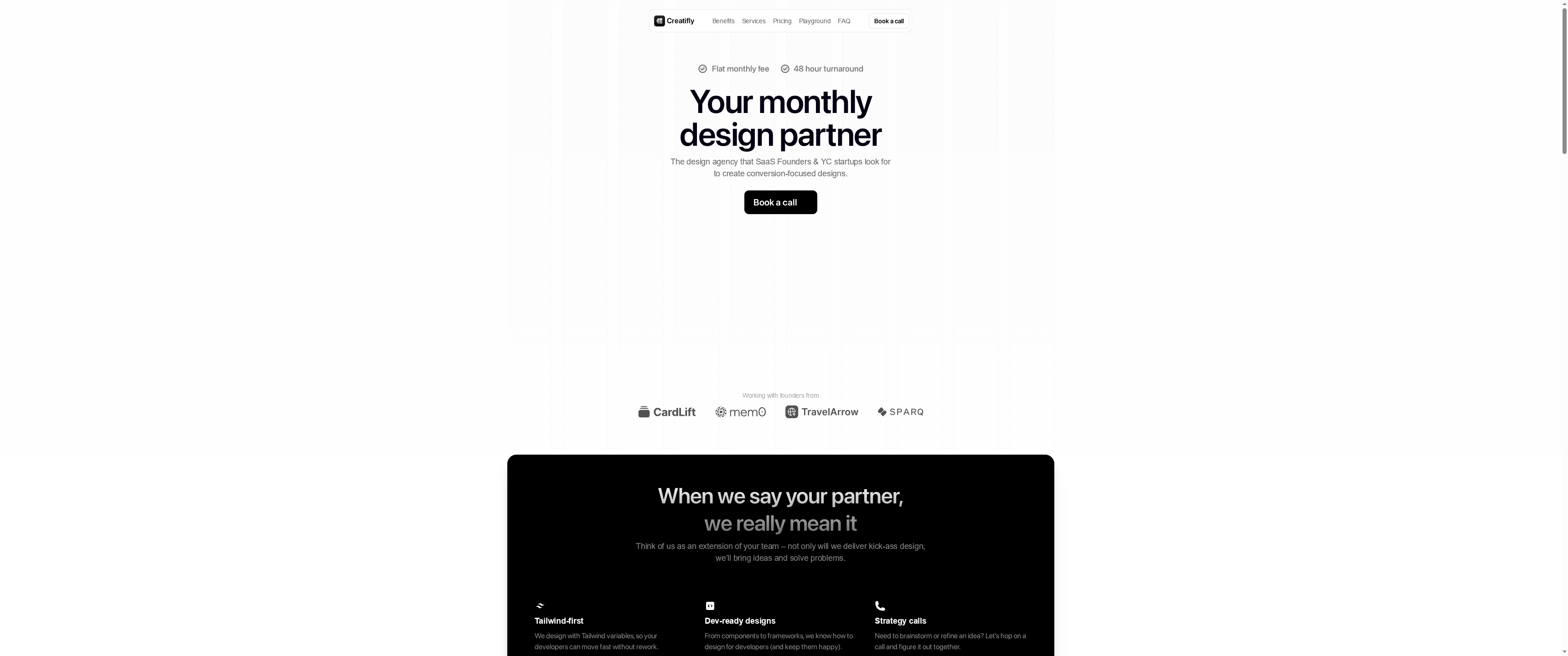
Creatifly is a subscription-based design partner built for SaaS founders and YC startups that need fast, conversion-focused design without hiring full-time staff. It promises 48-hour turnaround, Tailwind-first deliverables that developers can implement quickly, and a flexible, no-contract subscription model. The service excels at rapid iteration and conversion optimization, but its monthly pricing is steep for very early-stage startups or one-off projects.
Core Features
Creatifly combines rapid delivery and developer-friendly output with a strategic design mindset. Core features include guaranteed 48-hour turnaround for many requests, a Tailwind-first design approach that hands developers ready-to-ship assets, and flexible monthly subscriptions with no long-term contracts or hidden fees. The team frames their offering as a partnership rather than simple outsourcing and covers UI/UX, web, app, motion, and branding work focused on improving sign-ups, clicks, and measurable business impact.
Pros
- Flexible, on-demand service without long-term commitments: The subscription model lets teams scale design support up or down without hiring or severance friction.
- Fast 48-hour turnaround: Quick iteration cycles enable product teams to test and deploy design changes rapidly.
- Strong conversion focus: Creatifly centers work on outcomes like sign-ups and clicks, aligning design with growth metrics.
- Partnership integration with client teams: The model emphasizes working alongside product and engineering teams rather than operating as a detached vendor.
- Broad service scope across digital design disciplines: The offering spans UI/UX, web, app, motion, and branding so one vendor can handle multiple needs.
Cons
- High monthly pricing may exclude smaller startups: At $5,500–$6,000 per month, Creatifly is an investment that puts it out of reach for many early-stage companies.
- Subscription model requires ongoing spend: Teams with a single, time-limited project may pay more than a one-off engagement would cost.
- Limited public detail about scope per tier: The available information does not clearly define exactly what each subscription tier includes, which complicates comparisons and budgeting decisions.
Who It’s For
Creatifly fits SaaS founders, YC startups, and growth-stage product teams that need reliable, fast design capacity and prefer a monthly partnership to hiring in-house designers. It’s ideal for teams that prioritize speed, frequent iteration, and developer handoff quality, especially when design outcomes must directly support activation and conversion goals.
Unique Value Proposition
Creatifly’s unique value lies in pairing strategic, conversion-driven design with developer-friendly execution. The Tailwind-first approach reduces handoff friction and accelerates implementation, while the no-contract subscription model provides consistent design bandwidth that integrates into product workflows.
Real World Use Case
A SaaS startup uses Creatifly to iterate landing pages and product screens multiple times per sprint. With 48-hour turnarounds, the team tests variations, measures lift in sign-ups, and ships changes without recruiting or onboarding additional designers.
Pricing
Creatifly offers two headline subscription tiers: Visuals at $5,500 per month for a premium design experience, and All-in-One at $6,000 per month for full support with more frequent updates and additional services. These are ongoing monthly fees and reflect a continuous partnership model.
Website: https://creatifly.co
DesignJoy

At a Glance
DesignJoy is a subscription-based design service that offers unlimited design requests for a flat monthly fee, delivered personally by founder and sole designer Brett. It promises senior-level work with an average two-day turnaround and includes Webflow development for active subscribers. This model replaces juggling freelancers or hiring an agency, but it trades agency depth and scale for a single, highly experienced creator. Fast, predictable, and founder-driven. Consider capacity limits during high-demand periods.
Core Features
DesignJoy centers on a flat-fee subscription that lets you submit unlimited design requests across logos, web and mobile UI, branding, social assets, print basics, and UX work. Requests are managed via Trello integration and typically land within two days. The service is flexible: pause or cancel billing at any time, support multiple brands under one plan, and include Webflow development as part of the monthly package. Importantly, all work is handled directly by Brett—no outsourcing or additional staff—ensuring continuity and single-source accountability.
Pros
- Predictable monthly pricing simplifies budgeting. A single flat fee removes surprise invoices and agency retainers.
- Rapid turnaround keeps product teams moving. Most requests are completed in about two days, which suits fast sprints and short marketing cycles.
- Senior-level design delivered directly by the founder. You get one consistent, experienced designer instead of variable freelance quality.
- Unlimited requests enable continuous design throughput. You can queue multiple needs across branding, UI, and marketing without per-task billing.
- Client ownership of deliverables is clear. All final assets are unique and fully owned by the client, avoiding license complications.
Cons
- Service scope excludes some specialized work, such as 3D modeling, advanced animation, and very large-format print projects, which may require external vendors.
- Single-designer model creates capacity constraints during surges, so timelines could extend if demand spikes or multiple large projects overlap.
- Complex, multi-phase projects may be limited by bandwidth and specialization, so enterprise-level design programs might need agency support in addition to DesignJoy.
Who It’s For
DesignJoy fits startups, growth-stage SaaS companies, and teams that need steady, high-quality design without hiring in-house or managing multiple freelancers. If you require fast turnaround for marketing assets, landing pages, or iterative product UI polish—and you value direct collaboration with a senior designer—this service is a cost-effective alternative to agencies. If your work demands a design studio with dozens of specialties, this may not fully replace that capability.
Unique Value Proposition
DesignJoy’s promise is simple: unlimited, senior-level design delivered quickly by one committed professional for a predictable monthly fee. That combination of speed, consistency, and direct founder involvement is the core differentiator—especially attractive when you want fewer handoffs, clear ownership, and one creative voice across product and marketing.
Real World Use Case
A startup subscribes to DesignJoy to consolidate branding, website updates, and social assets. The team submits tasks via Trello, receives polished designs in roughly two days, and deploys assets quickly. Over months, the company iterates landing pages, refreshes marketing creatives, and keeps product UI consistent without hiring a full-time designer.
Pricing
$5,995 per month with one request at a time, unlimited brands, Webflow development included, and up to 2 users; you can pause or cancel anytime.
Website: https://designjoy.co
Eleken

At a Glance
Eleken is a focused design partner built specifically for SaaS teams that need fast, high-quality UI/UX work without the overhead of hiring full-time designers. Their model combines vetted, SaaS-experienced designers with flexible engagement options—trial, part-time, full-time, or team extensions—so you can scale design capacity quickly. If you need a partner who understands product-driven metrics and ship-ready interfaces, Eleken delivers consistent results. It’s especially strong when speed and SaaS domain expertise matter.
Core Features
Eleken supplies dedicated, SaaS-focused UI/UX designers who embed with your product team and use proven UX patterns and component libraries to accelerate delivery. Engagements are flexible—from short trials to ongoing subscriptions—and Eleken emphasizes rapid onboarding, often starting designers the next day. They run a rigorous vetting and training process for designers, and maintain transparent project management with direct communication channels between client and designer to reduce friction and iteration cycles.
Pros
- Speedy onboarding: Designers often start very quickly, which minimizes downtime and lets product teams iterate faster.
- SaaS-specific expertise: The team’s focus on SaaS products means design decisions are informed by common user flows and conversion-oriented patterns.
- Flexible scaling without hiring overhead: You can add design capacity temporarily or permanently without the recruiting and management burden of in-house hires.
- Transparent, direct communication: Clients work directly with assigned designers, which keeps feedback loops tight and reduces translation errors.
- Proven track record: With experience across 200+ SaaS products and positive client reviews, Eleken demonstrates repeatable outcomes for product teams.
Cons
- Limited to SaaS-focused work: Eleken’s specialization makes it less suitable if you need non-SaaS design like broad consumer branding or physical product interfaces.
- Minimum commitment length: A two-month minimum contract can feel like a long commitment for ultra-small projects or one-off tasks.
- No standalone marketing or branding services: If you expect full-service marketing creative or brand identity packages, those needs fall outside Eleken’s core offerings.
Who It’s For
Eleken is ideal for SaaS startups and product teams that need reliable, fast UI/UX support and value domain-specific design experience. Product managers, CTOs, and founders who want to reduce churn, improve activation, or prepare investor-ready interfaces will find Eleken especially useful. If you require short ramp-up time and close collaboration with your design lead, this service fits well.
Unique Value Proposition
Eleken’s unique value lies in combining rapid, low-friction onboarding with designers who already speak the SaaS product language. Instead of a generalist studio or hiring pipeline, you get a vetted specialist who understands component libraries, conversion flows, and iterative product design—delivered on demand.
Real World Use Case
A SaaS startup needing to reduce churn and prepare for investor demos used Eleken to redesign its product. A dedicated designer joined the team, ran quick iterations, and launched an improved interface on schedule, resulting in higher customer satisfaction and more confident investor conversations.
Pricing
Part-time designer $3,799/month, Full-time designer $5,999/month, Two full-time designers $10,999/month
Website: https://eleken.co
SaaS Design Tools Comparison
This table provides a comprehensive comparison of four design services tailored for SaaS companies, focusing on features, pros, cons, pricing, and best use cases.
| Service | Core Features | Pros | Cons | Pricing |
|---|---|---|---|---|
| Goodside | Rapid, senior-driven design; free design audit; flexible models. Specializes in SaaS challenges. |
Fast onboarding; senior talent; flexible engagement; strategic depth; transparent pricing. | Limited to digital products. | €110/hour |
| Creatifly | 48-hour turnaround; Tailwind-first deliverables; subscription model with no contract. |
No long-term commitments; fast turnaround; conversion focus; partnership model. | High monthly cost; ongoing spend required; scope ambiguity. | $5,500–$6,000/month |
| DesignJoy | Unlimited requests; direct founder work; rapid delivery via Trello. Webflow development included. |
Predictable pricing; fast turnaround; senior-level work; unlimited requests; clear ownership. | Limited scope for specialized work; single-designer capacity limits. | $5,995/month |
| Eleken | SaaS-specific designers; rapid onboarding; flexible scaling. Direct client communication. |
Speedy onboarding; SaaS expertise; flexible scaling; direct communication. | Limited to SaaS; minimum contract length; no marketing services. | Part-time: $3,799/month, Full-time: $5,999/month |
Note: All prices are subject to change and depend on the specified scope and details from the service providers. Check individual websites for the most accurate and complete information.
Elevate Your SaaS Product Design with Proven Expertise
The Best Product Design Platforms – Expert Comparison 2025 highlights challenges faced by SaaS companies such as unprofessional interfaces, disconnected user journeys, and unclear product positioning that stifle growth and reduce user activation. If your team is striving to transform complex subscription flows into cohesive and high-performing experiences that drive measurable conversion and revenue, addressing these core pain points with specialized design partners is essential.
At The Good Side, we understand how critical fast, expert-driven design solutions are for SaaS startups and growth teams. With over 100 senior, SaaS-focused designers available through flexible engagement models you can start quickly without the delays or risks of traditional hiring. Our process includes a free design audit, rapid talent matching, and full integration within two weeks ensuring immediate momentum on your product needs. Our strategic design services unify your product, website, and onboarding experience to accelerate go-to-market efforts and sustainable growth.
Looking for a strategic, senior design partner who can directly impact your SaaS product’s activation and retention?
Discover how to turn your product challenges into opportunities at The Good Side today. Begin with a free audit and fast matching that gets you measurable results in weeks. Start building a better product experience now.
Frequently Asked Questions
What features should I look for in a product design platform?
Look for features that enhance collaboration, streamline the design process, and offer intuitive user interfaces. Prioritize tools that support real-time feedback, version control, and integration with existing project management systems to improve workflow efficiency.
How can a product design platform improve my team’s productivity?
A product design platform can centralize design assets and facilitate communication, which reduces redundancy and enhances collaboration. Implementing such a platform may lead to a productivity increase of 20-30% within the first few weeks by allowing team members to focus on design rather than coordination tasks.
What is the typical onboarding process for a product design platform?
The typical onboarding process involves an initial setup phase where the platform is customized to fit the team’s needs, followed by training sessions on tool features. Engage your team in training within the first week to ensure they can effectively use the platform and integrate it into their daily routines.
Are product design platforms suitable for remote teams?
Yes, most product design platforms are designed to cater to remote teams, offering cloud-based access and features that facilitate collaboration across different locations. Evaluate platforms that provide robust video conferencing and commenting tools for better teamwork.
How can I measure the success of using a product design platform?
You can measure success through metrics such as design cycle time, user feedback on design quality, and the number of iterations needed before finalizing designs. Track these metrics over a specific period, such as 30-60 days, to assess improvements in your design process and outcomes.
Can product design platforms support multiple projects simultaneously?
Yes, many product design platforms allow teams to manage multiple projects simultaneously through features like project dashboards and workspaces. Organize your projects efficiently to ensure that team members can switch between tasks without losing focus or productivity.