
What Is Embedded Design and Why SaaS Companies Need It
Over half of American SaaS companies now embed designers directly within product teams to accelerate development and drive user engagement. For CTOs and product leaders, this trend matters because seamless collaboration between design, engineering, and product management shapes more intuitive digital experiences and reduces costly communication barriers. This overview reveals how embedded design unlocks new efficiencies, strengthens team integration, and delivers sharper competitive advantages for established SaaS organizations.
Table of Contents
- Embedded Design Defined For SaaS Companies
- Major Types Of Embedded Design Approaches
- How Embedded Designers Integrate With Teams
- Core Benefits For SaaS Growth And UX
- Key Pitfalls And How To Avoid Them
Key Takeaways
| Point | Details |
|---|---|
| Embedded Design Enhances Collaboration | This approach integrates design teams directly into product development, fostering seamless communication and a holistic understanding of user needs. |
| Three Approaches to Embedded Design | SaaS companies employ collaborative, platform-based, and strategic methodologies to embed design effectively into their workflows. |
| Key Benefits Include Increased Efficiency | By minimizing communication barriers, embedded design accelerates product development and enhances user experience, driving growth for SaaS organizations. |
| Avoid Common Pitfalls | Successful implementation requires clear communication protocols, adequate skill matching, and a robust understanding of both technical and design principles. |
Embedded Design Defined for SaaS Companies
Embedded design represents a strategic approach where design talent integrates directly into product development teams, creating seamless collaboration between design, product, and engineering functions. Unlike traditional design models that treat design as a separate service, embedded design transforms designers into core team members who deeply understand product goals and user needs.
In the SaaS context, embedded design goes beyond surface-level aesthetics. Interactive data visualization strategies enable designers to create more intuitive user experiences that drive product engagement. By embedding designers directly within product teams, SaaS companies can accelerate innovation, reduce communication friction, and develop solutions that are intrinsically aligned with user requirements.
The core principles of embedded design include continuous collaboration, shared ownership of product outcomes, and a commitment to solving user problems holistically. Designers working in an embedded model become strategic partners who contribute insights across multiple stages of product development. This approach allows for rapid prototyping, real-time feedback integration, and a more dynamic approach to solving complex user experience challenges.
Pro tip: Start your embedded design journey by selecting designers with strong technical communication skills who can seamlessly translate user needs into actionable product requirements.
Major Types of Embedded Design Approaches
SaaS companies typically implement three primary embedded design approaches: collaborative, integrated, and platform-based methodologies. Each approach offers unique strategies for blending design expertise directly into product development workflows, allowing teams to create more responsive and user-centric solutions.
The first approach is collaborative embedded design, which focuses on cross-functional team integration. Here, designers work shoulder-to-shoulder with product managers, engineers, and user researchers, breaking down traditional organizational silos. Low-code integration platforms enable these teams to rapidly prototype and implement design solutions without extensive technical barriers, democratizing the design process across skill levels.
A second approach involves platform-based embedded design, where companies leverage specialized tools and frameworks that enable seamless design integration. These platforms provide standardized components, design systems, and workflow tools that allow designers to contribute strategic insights while maintaining consistent product experiences. By establishing shared design languages and reusable interface elements, SaaS organizations can accelerate development cycles and ensure visual and functional coherence across complex product ecosystems.
The third methodology is strategic embedded design, which emphasizes long-term product vision and continuous user experience optimization. In this model, designers are not just contributors but strategic partners who shape product direction, conduct ongoing user research, and drive iterative improvements. This approach transforms design from a tactical execution role to a core strategic function that directly influences product success and market positioning.
Pro tip: Implement a rotating embedded design model where designers periodically switch between product teams to cross-pollinate insights and prevent design tunnel vision.
Here’s a comparison of the three main embedded design approaches used in SaaS companies:
| Approach | Team Structure | Primary Advantages | Potential Limitations |
|---|---|---|---|
| Collaborative | Cross-functional mix | Rapid prototyping, broad insights | May require strong leadership |
| Platform-based | Tool-driven frameworks | Scalable, consistent UI | Tool adoption curve |
| Strategic | Vision-focused experts | Drives product direction | Depends on designer expertise |
How Embedded Designers Integrate With Teams
Embedded designers function as strategic connectors, bridging communication gaps between different functional teams within SaaS organizations. Their integration goes far beyond traditional design roles, requiring a multifaceted approach that combines technical understanding, collaborative skills, and strategic thinking to drive product innovation and alignment.
The primary mechanism of integration involves agile development practices that enable seamless cross-functional collaboration. Embedded designers participate directly in sprint planning, daily stand-ups, and retrospective meetings, ensuring design considerations are woven throughout the product development lifecycle. They translate user research insights into actionable design recommendations, working closely with product managers, engineers, and user experience researchers to create holistic solutions that address complex user needs.
Technical integration requires embedded designers to develop deep contextual understanding of both product architecture and user experience requirements. They must become fluent in technical languages, understanding engineering constraints while simultaneously advocating for user-centric design principles. This involves using collaborative tools, participating in code reviews, contributing to technical documentation, and developing design systems that provide consistent interface guidelines across product surfaces.

Moreover, embedded designers serve as critical translators between technical and creative domains. They utilize their unique positioning to facilitate communication, reduce friction between departments, and ensure that design decisions are grounded in both user needs and technical feasibility. By maintaining a comprehensive view of product development, they help teams avoid siloed thinking and create more integrated, thoughtful digital experiences.
Pro tip: Establish regular cross-functional design critique sessions where team members from engineering, product management, and design can provide constructive feedback and align on product vision.
Core Benefits for SaaS Growth and UX
Embedded design represents a transformative approach for SaaS companies, delivering substantial benefits that extend far beyond traditional design methodologies. By integrating design expertise directly into product development processes, organizations can unlock significant competitive advantages and create more responsive, user-centric digital experiences.
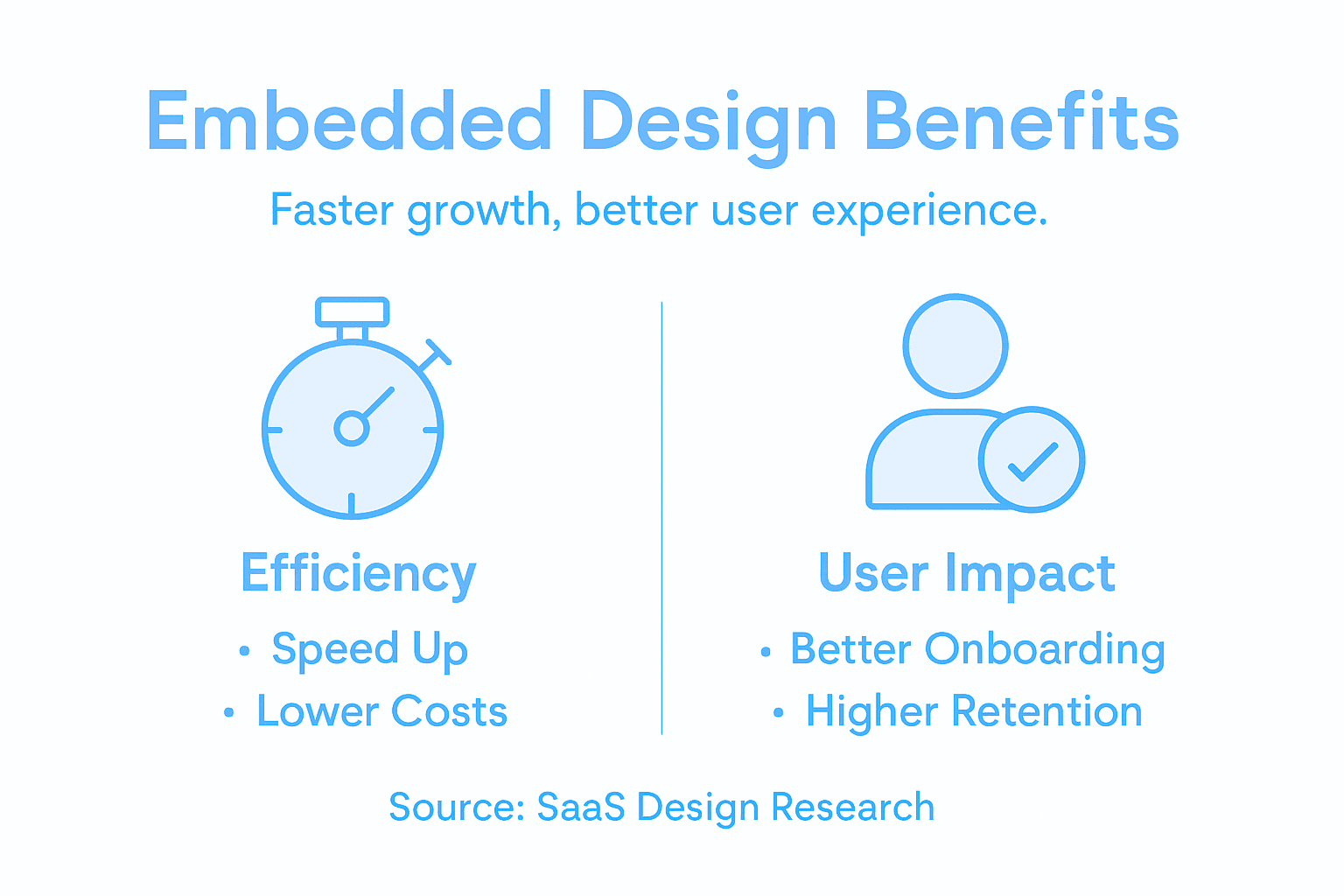
One primary benefit is the dramatic improvement in product development efficiency. Embedded integration platforms enable SaaS companies to rapidly scale product functionality while simultaneously reducing engineering overhead. This approach allows teams to accelerate time-to-market, streamline workflow complexity, and create more intuitive user interfaces that directly address customer pain points and market demands.
Moreover, embedded design fundamentally transforms user experience by creating deeper, more meaningful connections between product capabilities and user needs. By embedding designers directly within product teams, SaaS organizations can develop more nuanced understanding of user behaviors, preferences, and interaction patterns. This intimate collaboration leads to more sophisticated product features, enhanced user engagement, and ultimately, improved customer retention and satisfaction.
The strategic integration of embedded design also generates substantial economic value. By reducing communication friction, minimizing redundant work, and creating more aligned product development processes, SaaS companies can significantly lower development costs while simultaneously increasing the perceived value of their digital products. This approach enables more agile, responsive product iterations that can quickly adapt to changing market dynamics and emerging user expectations.
Pro tip: Implement quarterly cross-functional design workshops where product, engineering, and design teams collectively review user feedback and co-create innovative solution strategies.
Below is a summary of key benefits delivered by embedded design for SaaS organizations:
| Benefit | Description | Impact on SaaS Growth |
|---|---|---|
| Development Speed | Faster iteration, reduced bottlenecks | Shorter time-to-market |
| User Experience | Deeper understanding, intuitive solutions | Higher customer retention |
| Economic Efficiency | Lower costs, more aligned workflows | Increased profitability |
Key Pitfalls and How to Avoid Them
Embedded design implementation in SaaS organizations is complex, with numerous potential challenges that can derail successful integration. Understanding these potential pitfalls is crucial for product leaders seeking to leverage embedded design strategies effectively and minimize organizational friction.
The first critical challenge involves managing communication and collaboration dynamics. Non-scalable integration approaches can create significant barriers between design, product, and engineering teams. Common issues include misaligned expectations, unclear role boundaries, and insufficient cross-functional understanding. Successful embedded design requires establishing clear communication protocols, defining explicit collaboration frameworks, and creating shared metrics that incentivize holistic product development.
Another significant pitfall emerges from inadequate skill matching and team composition. Many SaaS companies mistakenly assume that any designer can effectively embed themselves within a product team. In reality, embedded designers require a unique combination of technical understanding, interpersonal skills, and strategic thinking. They must be adaptable, comfortable with ambiguity, and capable of translating complex technical constraints into elegant user experience solutions. Organizations must invest in comprehensive training, mentorship programs, and ongoing skill development to cultivate these specialized capabilities.
Technical integration challenges represent a third critical area of potential failure. Embedded designers must navigate complex technological ecosystems, understanding intricate product architectures while simultaneously advocating for user-centric design principles. This requires deep technical literacy, the ability to communicate across different professional languages, and a nuanced approach to balancing technical feasibility with user experience goals. Successful embedded design teams develop robust technical understanding while maintaining their creative problem-solving capabilities.
Pro tip: Conduct quarterly cross-functional skills assessments to identify potential communication gaps and provide targeted training for embedded design team members.
Unlock the Full Potential of Embedded Design in Your SaaS Product
The article highlights the critical challenge SaaS companies face when integrating design deeply into product teams to accelerate innovation and deliver user-centric solutions. If your team struggles with communication gaps, slowing development cycles, or surface-level UI work that fails to move the needle, embedded design can transform your product outcomes by pairing senior design leadership directly within your workflows. Concepts like collaborative and strategic embedded design demand designers who are not simply executors but strategic partners who understand your unique SaaS challenges.
Elevate your product growth with The Good Side. We specialize in embedding experienced designers who co-create with product and engineering teams to solve real user problems while driving measurable business results. Our flexible engagements empower you to access high-impact design leadership without the risk or delays of full-time hiring. Start building products that are easier to adopt, activate, and grow today. Discover how we help SaaS teams move beyond surface-level design by visiting The Good Side’s landing page and learn more about how strategic embedded design drives success.
Frequently Asked Questions
What is embedded design in the context of SaaS?
Embedded design is a strategic approach where design talent integrates directly into product development teams, creating seamless collaboration between design, product, and engineering functions to enhance user experience and drive product engagement.
Why do SaaS companies need embedded design?
SaaS companies benefit from embedded design as it accelerates innovation, reduces communication friction, and ensures that solutions are closely aligned with user needs. This approach enhances product development efficiency and leads to improved customer retention.
What are the main types of embedded design approaches used by SaaS companies?
The three main embedded design approaches in SaaS are collaborative, platform-based, and strategic embedded design. Each approach offers unique methodologies for integrating design expertise directly into product development workflows.
How do embedded designers contribute to product teams?
Embedded designers act as strategic connectors, participating in agile development practices and ensuring design considerations are included throughout the product lifecycle. They also facilitate communication between technical and creative teams, translating user needs into actionable design recommendations.